Dr. Danielle Schmitt

FACULTY SPOTLIGHT

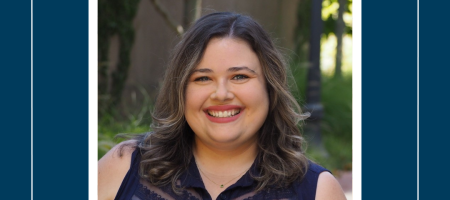
Dr. Danielle Schmitt is an Assistant Professor in the Department of Chemistry and Biochemistry and Principal Investigator of Schmitt Lab at UCLA, where she and her lab aim to understand how metabolism is regulated in healthy cells and perturbed in disease. We had the opportunity to interview Dr. Schmitt to ask about her experiences with undergraduate research at UCLA.

1. How would you describe your experiences with undergraduate research at UCLA?

The great thing about UCLA is the opportunity to mentor undergraduates in the lab, and train the next generation of scientists. I’ve found students at UCLA to be excited about research, and when given the chance, to be creative when working on their research projects.

2. What are your most effective approaches to promote undergraduate research success?

A goal for all undergraduates in my lab is to learn how to think creatively and critically about science, such that they can lead their own projects. I find that involving students in this process from the beginning, teaching them how to think creatively and critically about their projects, results in student success. I also encourage students to go to research talks from different departments. Sometimes research that might seem unrelated to their work can spark inspiration and lead to an exciting new idea or finding.

3. What resources at UCLA have been the most beneficial to including undergraduates in your research?

Undergraduates in my lab have participated in many organizations or efforts to include students in research, including PEERS, summer research fellowships, and URS. These programs are really excellent opportunities to help students find a lab, and also provide them with opportunities to have dedicated time to focus on research.

4. What should undergraduates consider before they begin their research journey?

As undergraduates begin on their research journey, they should think about what makes them excited about science. Do you want to know more about how cells function? Do you enjoy making new molecules? Or do you find work that has a direct translation to the clinic more exciting? This can help undergraduates figure out which kinds of research experiences and labs they would be interested in joining.

5. How do you support students as they navigate different career trajectories in science?

There are a lot of different jobs and career trajectories in science, and none of them have to be a linear path. I like to customize the training experience to each student and their future career interests. For instance, if someone wants to go to graduate school and pursue a PhD, I try to ensure they have meaningful research experiences that will set them up for success in grad school. For a student who might want to go into industry after graduating, we might search for summer internships or networking opportunities that will enhance their resume.

Research Opportunities at ucla

Research Intern (Off-campus: Cedars-Sinai)

Division/Department Overview:

The Department of Pathology and Laboratory Medicine (DPLM) at Cedars-Sinai Medical Center (CSMC) is one of the nation’s premier academic pathology departments.  The DPLM provides exceptional diagnostic support to help physicians guide patient therapy at CSMC and its affiliated hospitals.  CSMC is ranked by US News and World Reports as one of the top-10 hospitals in the nation.

In addition to world-class patient care services, the DPLM has 10 basic and translational research laboratories which study a wide range of biomedical topics including cancer biology, microbiology, renal disease and physiology, immune function, neurodevelopment and neurodegeneration.  Dr. Tourtellotte’s lab is funded by the NIH to study molecular mechanisms regulating neurodevelopment and peripheral and central neurogenerative disease such as Alzheimer’s disease.  He has mentored many PhD and MD/PhD students who have performed their dissertation research in his lab, and he is actively involved in mentoring undergraduate students, medical students and clinical residents and fellows.

Job Description:

The research intern will work closely under the supervision of senior scientists and the PI in the lab to learn molecular and biochemical techniques and participate in ongoing research projects.  A wide range of molecular, biochemical, morphological and tissue culture techniques are used in the lab to elucidate basic mechanisms of development and neurogenerative diseases.  In addition, the lab generates transgenic and gene targeted mice to model disease mechanisms that require behavioral, microsurgical, histological and physiologic techniques to analyze disease-related phenotypes and mechanisms.

Role Activities & Timeline:

Provide a detailed description of the activities that will be completed during this appointment. For interns, this should include specific information regarding mentorship and curriculum, including an intended timeline for the activities.
By the end of each quarter (3 months)
•    The intern will broaden their research skills through training under the mentorship and supervision of the lab’s faculty mentor.
•    The intern will learn how to perform molecular cloning using RT-PCR, PCR, restriction enzyme digestion, ligation, and cell transformation.
•    The intern will learn proper recordkeeping by documenting data in lab notebooks and presenting findings to the mentor and in departmental presentations.
•    The intern will learn how to conduct a literature review related to the project they are training on.
•    The intern will learn how to design experiments based on specific research questions.
•    The intern will practice implementing experimental designs and troubleshooting issues that may arise.

Requirements:
•    Must be 18 years of age or older.
•    Must have a HS Diploma or GED.
•    Must reside in the greater Los Angeles area or surrounding cities while conducting all activities related to the intern or visitor appointment.
•    INTERNS: Those participating for academic credit must receive academic credit for the duration of the internship.
•    VISITORS: Must be receiving funding from an eligible sponsoring institution (employer, educator, funder, etc.).

Preferred Education & Experience:
Undergraduates enrolled in a life sciences degree program with strong interest in biomedical research.  Interest in pursuing advanced graduate medical (MD), life science graduate (PhD) or physician-scientist (MD/PhD) is the typical aspiration of students who are particularly successful in this internship program.  A passion for advancing scientific discovery and medial knowledge is highly desirable.

Application Instructions:

Apply using the following link: https://careers.cshs.org/job/los-angeles/research-intern/252/91186630416

Robert Castillo

STUDENT SPOTLIGHT

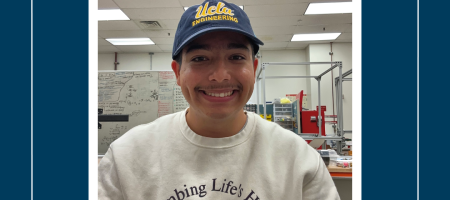
Meet Robert Castillo! Robert is a third-year Mechanical Engineering and Education Studies double major looking to get a PhD in Nuclear Engineering to become a professor. He was previously involved in the Summer Undergraduate Research Program, hosted by the Henry Samueli School of Engineering and Applied Science, and the Summer Programs for Undergraduate Research, hosted by the Undergraduate Research Centers. Currently, Robert is a member of UC LEADS and is conducting research on the Solar Methane Pyrolysis Project, specifically designed to manufacture the next generation of graphitic carbon-carbon composites, as part of the Nano Transport Research Group under the direction of Dr. Timothy S. Fisher.

1. How did you first get involved in your research project? Tell us a bit about the lab you are in and the research you are conducting!

I am a part of the Nano Transport Research Group (NTRG) under the direction of Dr. Timothy S. Fisher and I work alongside my graduate student mentor, Benjamin T. Heronimus, on the lab’s Solar Methane Pyrolysis Project specifically designed to manufacture the next generation of graphitic carbon-carbon composites! Some applications of these types of C-C composites range from providing superior thermal management within aerospace vehicles in addition to serving as a carbon-neutral option for moderating materials in the next generation of nuclear reactors. My specific focus on this project centers on testing the final composites’ mechanical properties through tensile tests and material characterization, with the hope of one day incorporating indigenous Latin American weaving practices and ion-irradiation campaigns into the scope of the work.

I first got involved in my lab during the Winter Quarter of my first year at UCLA where it honestly took a lot of trial and effort to find the right fit, based both on personal circumstances and opportunities available. I had the chance to attend one of Professor Fisher’s office hour sessions early in the quarter to discuss possible research projects, and it was just a matter of filling out the lab interest form and connecting with Ben to get started on some exciting work!

2. How would you describe your research experience at UCLA?

I think my research experience here at UCLA has been nothing short of uplifting for not only my professional self, but my personal life too. As I started out at this university, I struggled with immense bouts of imposter syndrome and doubts about whether I could keep up with the rigor that is expected at UCLA; however, as my research has become more ingrained into my daily life as a student and I’ve had the chance to meet more researchers outside of my project or NTRG as a whole, I no longer experience these feelings of inadequacy to the same degree. Not to mention, being at the forefront of graphite research reveals a lot of machines and technology you didn’t even know existed, so my experience has been “world-opening” in that regard.

3. What is your year and major?

I am a third-year Mechanical Engineering and Education Studies double major.

4. What is one piece of advice you have for other students thinking about getting involved in research?

My one piece of advice for anyone wanting to get into research is to just apply to that lab or talk to that professor that conducts work you’re interested in no matter what. When I first started out in my lab, I knew absolutely nothing about graphite, composites, or many of the concepts involved in my work. When I applied to NTRG, I had just finished taking Pre-calculus and Introductory Chemistry, with no physics or engineering courses yet on my transcript. Over the course of time in your lab, you will pick up on the flow and procedures even without the contextual classes, so there’s no need to worry!

5. Have you attended a conference before? If so, can you describe your experience on preparation, presenting, etc.?

While I have not attended a conference before, I have presented at a physical poster symposium early on in my research journey. I honestly felt that the hardest part about that event was the amount of time needed to really flesh out my poster, both in content and layout, in a way that followed every requirement listed out by the program. There were a lot of weekly meetings about a month and a half before the symposium date to make sure we had work that fit the guidelines. I think this is good though, since you know that when it is time for the actual poster or vocal presentation, you have passed the hardest part of the entire process; your knowledge and confidence about your research will naturally seep through, even if you don’t realize it in the moment

6. Have you had your work published? Can you talk about what that process was like?

Yes, I was recently included as an author on a NTRG paper publication shared with my PI and my graduate student mentor about the mechanical properties of our carbon-carbon composites. Similar to preparing for a vocal or poster presentation, there is so much preparation to be done even before you begin the actual writing part. A substantial literature review of both current and foundational studies within your field not only makes up a lot of the introductory content, but also how you guide and present your writing later on in the paper. There were a lot of meetings between Professor Fisher, Ben, and myself to establish the narrative and messages we wanted to send through this research. Writing a paper grants you the unique opportunity to combine traditional writing with the world of scientific diagrams and figures to tell your research story, an aspect to this process that I found especially rewarding. I discovered that getting the initial manuscript ready for submission was only the first hurdle, and the review process can take a lot longer than you might first assume, a couple months after your initial submission, actually. It may seem like a lot of  difficult work, and it is, but there really isn’t a better feeling than seeing your name on a publication just like the ones you read for your literature review.

7. What are your future career goals?

My future career goals involve getting a Ph.D. in Nuclear Engineering to become a professor in order to intersect my passion for engineering and education. I would love to continue my research interests in nuclear moderating materials to investigate ways to make our current and future fleets of reactors safer for all communities that they reside in.

8. Please list any URC/departmental programs you are/were involved in. How has your experience been in these programs?

I was previously involved in both the SURP and SPUR programs, and I am currently a member of the UC LEADS program that has led to my future involvement in UC Berkeley’s CalNERDS summer research experience. My work in the past two summers with the SURP and SPUR programs were instrumental for honing my skills as a researcher and becoming more connected to my project; learning presentation, poster-making, and experimental design skills are key components to my resume and overall skillset as a student. UC LEADS has provided me access to a plethora of resources surrounding how to become more resilient in the lab, research ethics, and best practices to promote minority success within STEM graduate programs. As I progress through UC LEADS, I know it will be instrumental to helping me apply to graduate school and remaining funded throughout my Ph.D. journey, in addition to the continuing the wonderful connections I have made with my cohort!

9. What was the impact of undergraduate research on your career path?

My experience within undergraduate research has not only molded my intentions to become a professor one day, but also has nailed down my specific interests within the broad field of nuclear energy. Without my time in NTRG and the Solar Methane Pyrolysis project, I do not think I would have as strong of an interest in graphite and carbon-carbon composites as I do now. Through research, I found the perfect way to combine my enthusiasm for engineering and education.


Cara Susilo

STUDENT SPOTLIGHT

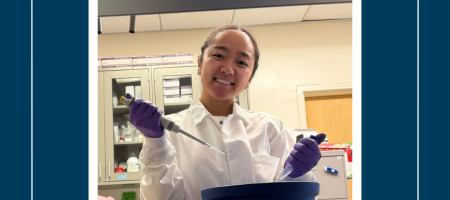
Meet Cara Susilo! Cara is a fourth-year Bioengineering major, currently conducting research at the Kamariza Lab focusing on protein engineering with Cas enzymes, and culturing and extracting genomic DNA from non-tuberculous myobacteria. Cara has attended several national conferences, including the Biomedical Engineering Society Conference and the American Society for Microbiology Conference, and was recently published as a second author on her lab’s first publication. Read Cara’s full interview below.

1. How did you first get involved in your research project? Tell us a bit about the lab you are in and the research you are conducting (if possible)!

I became involved in research during Winter Quarter of my freshman year where I joined the Kamariza Lab in the Bioengineering Department. For most of my time, I worked on project demonstrating how solvatochromic trehalose probes can not only detect drug resistant tuberculosis, but differentiate between susceptible and resistant TB using a plate reader as a low cost and point-of-care friendly readout. I was also fortunate to join this project from its inception all the way to publication, and as one of the first members of the Kamariza Lab, I have had the pleasure of watching it grow! Today, I’m working on two new projects, specifically focusing on protein engineering with Cas enzymes, and culturing and extracting genomic DNA from non-tuberculous mycobacteria. Our lab is incredible diverse and supportive, and the graduate students do an amazing job ensuring undergrads have quality mentorship.

2. How would you describe your research experience at UCLA?

My research experience has been incredibly positive. I was able to strengthen technical skills and solidify my own research drive as I worked throughout the year, and opportunities to present within my department and during Undergraduate Research Week has been helped me in this process. The support I received from my department and URC has significantly impacted my experience, and I am thankful for the opportunities I’ve had throughout the last four years!

3. What is your year and major?

Fourth year Bioengineering

4. What is one piece of advice you have for other students thinking about getting involved in research? As a transfer student yourself, do you have advice specific to other transfer students?

Don’t be afraid to put yourself out there and send that cold email! Research gives so much more than just technical skills, you also learn how to do data analysis, develop scientific literacy skills, and participate in science on such a hands-on level. Show your passion and willingness to learn, and the opportunity will come to you.

5. Have you attended a conference before? If so, can you describe your experience on preparation, presenting, etc.?

I have attended several national conferences including BMES and ABRCMS. Preparing the poster or oral presentation is sometimes challenging, but you get to really understand the science as you make it. For poster sessions, a lot of grad students and even professors stopped by. It was slightly intimidating at first, but I ended up connecting with other exciting undergrads and people in academia at all levels. They also gave really helpful feedback on presenting and also other possible experiments which I could bring back to the lab.

6. Have you had your work published? Can you talk about what that process was like?

I recently published as a second author on our labs first publication! The majority of the process was spent performing experiments, discussing the data, and performing follow-up experiments. As my grad student was writing the manuscript, I helped write a couple of the methods and captions, and helped proofread before we submitted. I also performed some of the revision experiments. While there were many late nights and early mornings, seeing the publication accepted made the work worth it.

7. What are your future career goals?

I hope to go to graduate school to pursue a PhD in Bioengineering or Chemical Engineering. Afterwards, I plan to enter the biotechnology industry as a scientist.

8. Please list any URC/departmental programs you are/were involved in. How has your experience been in these programs?

During the summer of my freshman year, I participated in the URC Sciences Summer Program which funded summer research. In the spring of my second year, I was awarded the UC LEADS Fellowship. With their support, I could continue developing other essential research skills, and participated in the Summer Research Training Program at UCSF this past summer as part of their second summer.

9. What was the impact of undergraduate research on your career path?

Prior to joining a lab, I was less inclined to pursue graduate school and wanted to go straight into industry. But throughout the past couple of years, I found value in graduate school, especially in further specializing within bioengineering, and refining scientific skills on the bench. I’ve gained an appreciate for graduate work as well, and in seeing my own grad student’s experiences, I have been inspired to go to the next level.