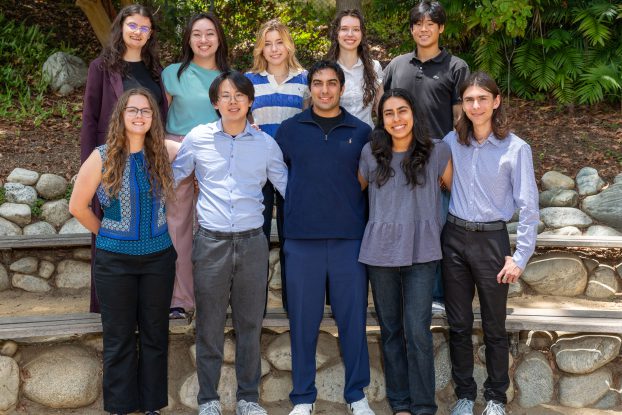
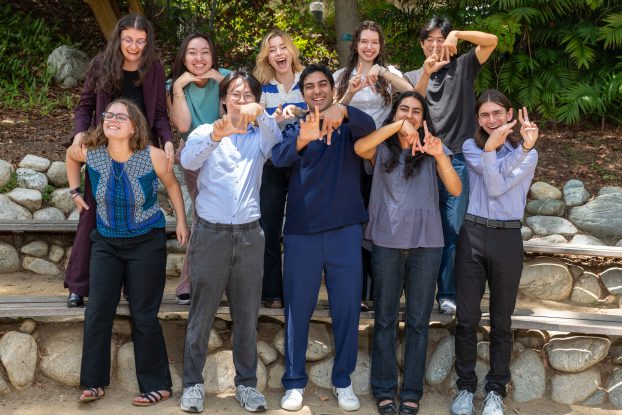
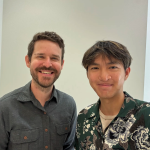
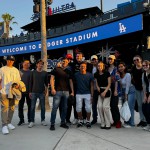
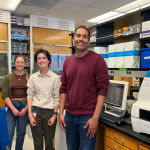
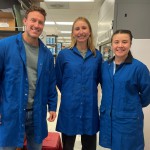
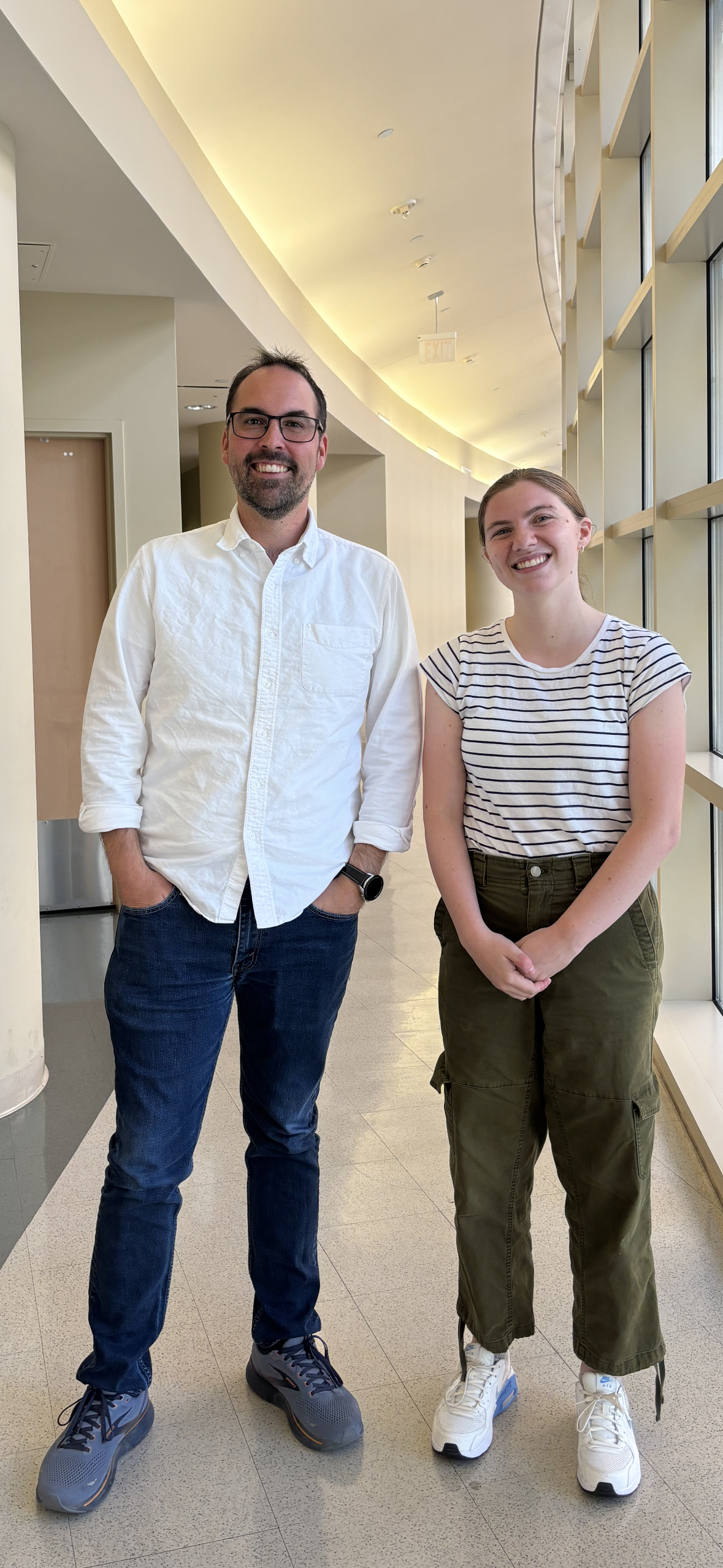
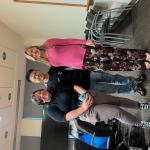
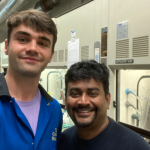
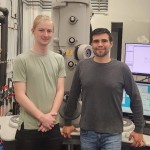
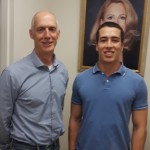
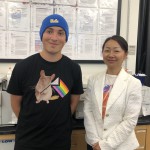
Alen Poehlman (2025 Cohort) Awarded UW Chemistry Scholarship
Congratulations to Alen Poehlman (2025) for receiving the UW Chemistry Scholarship
An Undergraduate Summer Research Program in Science and Biotechnology
The Amgen Scholars Program is a national program to increase learning and networking opportunities for students committed to pursuing a career in science or engineering.
During summer 2026, UCLA will host 10 Amgen Scholars. 2 will be undergraduates from UCLA and 8 will be from other 4-year colleges and universities.
2026 PROGRAM DATES: 10 WEEK PROGRAM
Sunday, JUNE 21 (move-in) – Thursday, August 27, 2025 (move-out)
Orientation and opening reception: Monday, JUNE 22
Students interested in summer research in any area of biomedical science, chemistry, bioengineering or chemical engineering are encouraged to apply. Students will be paired with a UCLA faculty mentor if the student does not already have a mentor at UCLA. Please visit the Amgen Faculty page for information on over 100 potential mentors on the UCLA campus. If you are interested in another faculty that is not listed on the link above you can search for other faculty that you might be interested.
In addition to working full time in the laboratory for 10 weeks, the program features:
Applicants must be:
Upon receiving an Amgen Scholars Award, students sign an agreement to fulfill the following requirements
Please note: The UCLA Amgen Scholars Program reserves the right to adjust stipend amounts for students receiving alternative funding sources.
For UCLA Students Receiving Financial Aid: When Financial Aid is disbursed, it credits to a UCLA student’s BAR account, paying current year outstanding charges. These charges include registration fees, tuition, and other education-related expenses. Any aid credited to the student’s account in excess of these charges is then made available as a refund check which is mailed to the student or deposited electronically into their bank account.
Note: Since Amgen Scholars cannot enroll in courses over the summer, they typically do not use financial aid during this time. Therefore, unless there are any existing current year outstanding charges, students primarily receive their summer stipend in the form of a disbursement check or direct deposit.
For Visiting Students: These student stipends will be issued in the form of a disbursement check that is deposited electronically or mailed to the student.
Kim Mendez
Program Representative, UCLA Amgen Scholars Program
Phone: 310-206-2182
Email: amgensch@lifesci.ucla.edu
Many thanks to the Amgen Foundation for such generous support of this program.
BEFORE YOU APPLY: Check to see if you can participate in the entire program from Sunday, June 21 – Thursday, August 27, 2025. All participants must attend the program for its entire duration.
Review the program’s eligibility requirements. No exceptions are made with regards to the basic eligibility requirements.
Applicants must be:
PLEASE NOTE: SPUR Application for 2026 is now live: SPUR – Online Application | UCLA Graduate Programs
To be considered for the program, an applicant must complete ALL the application components listed below (SPUR application + Application packet (including transcripts) + Survey). The application components do not have to be completed in the order they are listed, but we do encourage you to contact your recommender as soon as possible about the letter of recommendation. All application materials must be received by February 1, 2026. Please include your transcript attached to the end of the application packet and send the completed packet to amgensch@lifesci.ucla.edu. If your transcript is unable to be combined with the packet, please send it as a separate document in the same email as your application packet!
Student Submission:
Part 1: Submit an online SPUR Application: Make sure to choose Amgen Scholars in the Summer Programs at UCLA pull-down menu.
Part 2: Complete the survey linked here: CLICK HERE. The purposes of this survey are to gather contact information and other demographic information. Please fill out in its entirety paying special attention to the program dates.
Part 3: Complete the application packet which includes the following sections:
Faculty Submission:
Before you submit your application packet to amgensch@lifesci.ucla.edu:
Kim Mendez
Program Representative, UCLA Amgen Scholars Program
amgensch@lifesci.ucla.edu
Your letter of recommendation should be from a faculty member at your current institution who can best assess your ability for academic research and your motivation to attend graduate school. If your research experiences have been at a different institution, you may ask your faculty mentor at that institution to write your letter of recommendation. Only one letter of recommendation is required, but additional letters may be submitted. Please note that a Letter of Recommendation Waiver Form must be submitted for each letter submitted.
To best assist the Amgen Faculty Review Committee, faculty should discuss the following:
If there are any other insights that the faculty wishes to share, we welcome that information. Letters should be composed on departmental letterhead.
The applicant will fill out and sign the Letter of Recommendation Waiver form (top portion)which is located in the application packet. Please be sure to share this form with your academic faculty who is writing your letter of recommendation. Both the letter (submitted by faculty) and Letter of Recommendation Waiver Form (submitted by applicant in application packet) should be emailed to amgensch@lifesci.ucla.edu. Please make sure the faculty receives a copy of the complete waiver form. All materials must be received by the posted deadline of February 1, 2025.
Email:
amgensch@lifesci.ucla.edu
The letter of recommendation remains confidential during the admission process. If the applicant has not waived his/her rights to inspect the recommendation, the faculty’s evaluation will become accessible as part of the education record only if the applicant is admitted into the program. Students should review the letter of recommendation waiver form with faculty recommenders and have the faculty send the waiver form. Please make sure the faculty receives a copy of the complete waiver form.
Kim Mendez
Program Representative, UCLA Amgen Scholars Program
amgensch@lifesci.ucla.edu
The following faculty have agreed to consider hosting an Amgen Scholar for 10 weeks in the summer. Be sure to list the faculty you are interested in working with in your faculty mentor request form. You are also welcome to search through UCLA’s departmental sites to identify other faculty that interest you. If you are a UCLA student currently working in a lab, you will continue to work in this lab over the summer.
| FACULTY NAME | DEPARTMENT | SITE |
| Cai, Hua Linda | Anesthesiology | link |
| Chanfreau, Guillaume | Biochemistry | link |
| Clarke, Catherine | Biochemistry and Molecular Biology | link |
| Clubb, Robert | Biochemistry and Molecular Biology | link |
| Quinlan, Margot | Biochemistry and Molecular Biology | link |
| Di Carlo, Dino | Bioengineering | link |
| Kamei, Daniel | Bioengineering | link |
| Kasko, Andrea | Bioengineering | link |
| Meyer, Aaron | Bioengineering | link |
| Schmidt, Jacob | Bioengineering | link |
| Wu, Ben | Bioengineering | link |
| Kamariza, Mireille | Bioengineering | link |
| Wong, Gerard | Bioengineering | link |
| Backus, Keriann | Biological Chemistry | link |
| Carey, Michael | Biological Chemistry | link |
| De Robertis, Edward M. | Biological Chemistry | link |
| Frand, Alison | Biological Chemistry | link |
| Gonen, Tamir | Biological Chemistry | link |
| Guo, Feng | Biological Chemistry | link |
| Hong, Weizhe | Biological Chemistry | link |
| Kurdistani, Siavash | Biological Chemistry | link |
| Loo, Joseph | Biological Chemistry | link |
| Plath, Kathrin | Biological Chemistry | link |
| Van der Bliek, Alexander | Biological Chemistry | link |
| Wohlschlegel, James | Biological Chemistry | link |
| Bhaduri, Aparna | Biological Chemistry | link |
| Sobreiraq, Debora | Biological Chemistry | link |
| DeNardo, Laura | Brain Research Institute | link |
| Tintut, Yin | Cardiology | link |
| Grody, Wayne | Cellular & Molecular Pathology | link |
| Rao, Jian Yu | Cellular & Molecular Pathology | link |
| Monbouquette, Harold G | Chemical & Biomolecular Engineering | link |
| Tang, Yi | Chemical Engineering | link |
| Clarke, Steve | Chemistry & Biochemistry | link |
| Deming, Timothy | Chemistry & Biochemistry | link |
| Doyle, Abigail | Chemistry & Biochemistry | link |
| Garcia-Garibay, Miguel | Chemistry & Biochemistry | link |
| Garg, Neil | Chemistry & Biochemistry | link |
| Gelbart, William | Chemistry & Biochemistry | link |
| Harran, Patrick | Chemistry & Biochemistry | link |
| Houk, Ken | Chemistry & Biochemistry | link |
| Kaner, Richard | Chemistry & Biochemistry | link |
| Koehler, Carla | Chemistry & Biochemistry | link |
| Kwon, Ohyun | Chemistry & Biochemistry | link |
| Martinson, Harold | Chemistry & Biochemistry | link |
| Merlic, Craig | Chemistry & Biochemistry | link |
| Rodriguez, Jose | Chemistry & Biochemistry | link |
| Rubin, Yves | Chemistry & Biochemistry | link |
| Sletten, Ellen | Chemistry & Biochemistry | link |
| Tolbert, Sarah | Chemistry & Biochemistry | link |
| Torres, Jorge | Chemistry & Biochemistry | link |
| Lawson, Michael | Chemistry & Biochemistry | link |
| Schmitt, Danielle | Chemistry & Biochemistry | link |
| Jay, Jennifer | Civil & Environmental Engineering | link |
| Soatto, Stefano | Computer Science | link |
| DiStefano, Joseph | Computer Science/Medicine | link |
| Jewett, Anahid | Dentistry | link |
| Spigelman, Igor | Dentistry | link |
| Wong, David | Dentistry/Oral Biology and Medicine | link |
| Modlin, Robert | Dermatology/Microbiology, | link |
| Fong, Peggy | Ecology & Evolutionary Biology | link |
| Garud, Nandita | Ecology & Evolutionary Biology | link |
| Savage, Van Maurice | Ecology & Evolutionary Biology/Biomathematics | link |
| Daniel Schwalbe-Koda | Materials Science & Engineering | link |
| Wang, Kang | Electrical Engineering | link |
| Dell’Angelica, Esteban | Human Genetics | link |
| Dipple, Katrina | Human Genetics | link |
| Fan, Guoping | Human Genetics | link |
| Martinez-Agosto, Julian | Human Genetics | link |
| Nelson, Stanley | Human Genetics | link |
| Pajukanta, Paivi Elisabeth | Human Genetics | link |
| Sinsheimer, Janet | Human Genetics | link |
| Suchard, Marc | Human Genetics | link |
| Halperin, Eran | Human Genetics | link |
| Wells, Michael | Human Genetics | link |
| Quijada, Pearl | Integrated Biology and Physiology | link |
| Arnold, Art | Integrative Biology & Physiology | link |
| Correa, Stephanie | Integrative Biology & Physiology | link |
| Crosbie, Rachelle | Integrative Biology & Physiology | link |
| Frye, Mark | Integrative Biology & Physiology | link |
| Hsiao, Elaine | Integrative Biology & Physiology | link |
| Phelps, Patricia | Integrative Biology & Physiology | link |
| Rowat, Amy | Integrative Biology & Physiology | link |
| Schlinger, Barney | Integrative Biology & Physiology | link |
| Tidball, James | Integrative Biology & Physiology | link |
| Villanueva, Claudio | Integrative Biology & Physiology | link |
| White, Stephanie | Integrative Biology & Physiology | link |
| Xiao, Grace Xinshu | Integrative Biology & Physiology | link |
| Yang, Xia | Integrative Biology & Physiology | link |
| Deters, Kacie | Integrative Biology & Physiology | link |
| Deeds, Eric | Integrative Biology & Physiology | link |
| Ketema, Paul | Integrative Biology & Physiology | link |
| Glanzman, David | Integrative Biology & Physiology/Neurobiology | link |
| Farber, Debora | Jules Stein Eye Institute – Ophthalmology | link |
| Yang, Xian-Jie | Jules Stein Eye Institute – Ophthalmology/Neurobiology | link |
| Brent, Gregory | Medicine | link |
| Singh, Ram | Medicine, Pathology and Laboratory Medicine | link |
| Lusis, Aldons Jake | Medicine/Human Genetics/ | link |
| Zack, Jerome | Medicine/Microbiology, Immunology & Molecular Genetics | link |
| Dubinett, Steven | Medicine/Molecular & Medical Pharmacology | link |
| Sternini, Catia | Medicine/Neurobiology | link |
| Demer, Linda | Medicine/Physiology/Bioengineering | link |
| Hevener, Andrea | Medicine-Endocrinology | link |
| Black, Douglas | Microbiology, Immunology & Molecular Genetics | link |
| Bradley, Peter | Microbiology, Immunology & Molecular Genetics | link |
| Chen, Yvonne | Microbiology, Immunology & Molecular Genetics | link |
| Cheng, Genhong | Microbiology, Immunology & Molecular Genetics | link |
| Fregoso, Oliver | Microbiology, Immunology & Molecular Genetics | link |
| Hallem, Elissa | Microbiology, Immunology & Molecular Genetics | link |
| Hill, Kent L. | Microbiology, Immunology & Molecular Genetics | link |
| Johnson, Patricia | Microbiology, Immunology & Molecular Genetics | link |
| Kohn, Donald B | Microbiology, Immunology & Molecular Genetics | link |
| Miceli, Carrie | Microbiology, Immunology & Molecular Genetics | link |
| Miller, Jeffrey H. | Microbiology, Immunology & Molecular Genetics | link |
| Pernas, Lena F. | Microbiology, Immunology & Molecular Genetics | link |
| Pyle, April | Microbiology, Immunology & Molecular Genetics | link |
| Smale, Stephen | Microbiology, Immunology & Molecular Genetics | link |
| Witte, Owen | Microbiology, Immunology & Molecular Genetics | link |
| Yang, Lili | Microbiology, Immunology & Molecular Genetics | link |
| Yang, Otto | Microbiology, Immunology & Molecular Genetics | link |
| Zhou, Z. Hong | Microbiology, Immunology & Molecular Genetics | link |
| Li, Melody | Microbiology, Immunology & Molecular Genetics | link |
| Covarrubias, Anthony | Microbiology, Immunology, and Molecular Genetics | link |
| O’Sullivan, Timothy | Microbiology, Immunology, and Molecular Genetics | link |
| Su, Maureen | Microbiology, Immunology, and Molecular Genetics | link |
| Chow, Samson | Molecular & Medical Pharmacology | link |
| Christofk, Heather | Molecular & Medical Pharmacology | link |
| Clark, Peter | Molecular & Medical Pharmacology | link |
| Graeber, Thomas | Molecular & Medical Pharmacology | link |
| Huang, Jing | Molecular & Medical Pharmacology | link |
| Jiang, Meisheng | Molecular & Medical Pharmacology | link |
| Kaufman, Daniel | Molecular & Medical Pharmacology | link |
| Li, Huiying | Molecular & Medical Pharmacology | link |
| Melega, William | Molecular & Medical Pharmacology | link |
| Nathanson, David | Molecular & Medical Pharmacology | link |
| Reddy, Srinivasa | Molecular & Medical Pharmacology | link |
| Sun, Ren | Molecular & Medical Pharmacology | link |
| Wu, Lily | Molecular & Medical Pharmacology | link |
| Czernin, Johannes | Molecular & Medical Pharmacology/Nuclear Medicine Clinic | link |
| Banerjee, Utpal | Molecular, Cell & Developmental Biology | link |
| Chen, Jau-Nian | Molecular, Cell & Developmental Biology | link |
| Clark, Amander | Molecular, Cell & Developmental Biology | link |
| Coller, Hilary | Molecular, Cell & Developmental Biology | link |
| Goldstein, Andrew | Molecular, Cell & Developmental Biology | link |
| Hartenstein, Volker | Molecular, Cell & Developmental Biology | link |
| Jacobsen, Steven | Molecular, Cell & Developmental Biology | link |
| Jones, Leanne | Molecular, Cell & Developmental Biology | link |
| Lin, Chentao | Molecular, Cell & Developmental Biology | link |
| Long, Jeffrey | Molecular, Cell & Developmental Biology | link |
| Mikkola, Hanna | Molecular, Cell & Developmental Biology | link |
| Nakano, Atsushi | Molecular, Cell & Developmental Biology | link |
| Pellegrini, Matteo | Molecular, Cell & Developmental Biology | link |
| Sagasti, Alvaro | Molecular, Cell & Developmental Biology | link |
| Zamudio, Jesse | Molecular, Cell & Developmental Biology | link |
| Askary, Amjad | Molecular, Cell and Developmental Biology | link |
| Farmer, D’ Juan | Molecular, Cell and Developmental Biology | link |
| Braybrook, Siobhan | Molecular, Cell, & Developmental Biology | link |
| Bisley, James | Neurobiology | link |
| Butler, Samantha | Neurobiology | link |
| Dreier, Lars | Neurobiology | link |
| Engel Jr., Jerome | Neurobiology | link |
| Feldman, Jack | Neurobiology | link |
| Harper, Ronald | Neurobiology | link |
| Novitch, Bennett | Neurobiology | link |
| Portera-Cailliau, Carlos | Neurobiology | link |
| Daboussi, Lydia | Neurobiology | link |
| Dipoppa, Mario | Neurobiology | link |
| Peng, Yirong | Neurobiology | link |
| Brecha, Nicholas | Neurobiology/Medicine | link |
| Bitan, Gal | Neurology | link |
| Jen, Joanna | Neurology | link |
| Lai, Albert | Neurology | link |
| Geschwind, Daniel | Neurology/Psychiatry & Biobehavioral Sciences/ | link |
| Golshani, Peyman | Neuroscience | link |
| Levine, Michael | Neuroscience | link |
| Schweizer, Felix | Neuroscience | link |
| Teplow, David | Neuroscience | link |
| Hovda, David | Neurosurgery | link |
| Prins, Mayumi | Neurosurgery | link |
| Baum, Linda | Pathology & Laboratory Medicine | link |
| Dawson, David | Pathology & Laboratory Medicine | link |
| Kelly, Kathleen | Pathology & Laboratory Medicine | link |
| Teitell, Michael | Pathology & Laboratory Medicine | link |
| Tontonoz, Peter | Pathology & Laboratory Medicine | link |
| Schiestl, Robert | Pathology & Laboratory Medicine/ | link |
| Zeltzer, Lonnie | Pediatrics/Anesthesiology/ | link |
| Divakaruni, Ajit | Pharmacology | link |
| TeSlaa, Tara | Pharmacology | link |
| Ikotun (Tayo), Oluwatayo | Pharmacology | link |
| Divakaruni, Ajit | Pharmacology | link |
| Bozovic, Dolores | Physics, Biophysics & Astronomy | link |
| Abramson, Jeff | Physiology | link |
| Bertholet, Ambre | Physiology | link |
| De Biase, Lindsay | Physiology | link |
| Gwack, Yousang | Physiology | link |
| Khakh, Baljit | Physiology | link |
| Ping, Peipei | Physiology | link |
| Vergara, Julio | Physiology | link |
| Bavi, Navid | Physiology | link |
| Zhang, Chuchu | Physiology | link |
| Bertholet, Ambre | Physiology | link |
| Abderemane-Ali, Payal | Physiology | link |
| Colwell, Christopher | Psychiatry & Biobehavioral Sciences | link |
| Small, Gary | Psychiatry & Biobehavioral Sciences | link |
| Coppola, Giovanni | Psychiatry & Biobehavioral Sciences/Neurology | link |
| Clewett, David | Psychology | link |
| Izquierdo, Alicia | Psychology – Behavioral Neuroscience | link |
| McBride, William | Radiation Oncology | link |
| Penichet, Manuel | Surgery/ | link |
| Zeng, Gang | Urology | link |
![]() |
Shereen Ahmad 2025-2026 Home University: Dickinson College Class: senior Major: Neuroscience Faculty Mentor: Dr. Bennett Novitch Shereen is a rising senior at Dickinson College where she works under Dr. Anthony |
![]() |
Victoria Ho 2025-2026 Home University: University of Toledo Class: senior Major: Biochemistry Faculty Mentor: Dr. Siavash Kurdistani Victoria is a rising senior at the University of Toledo, Ohio, majoring in Biochemistry with a minor in Biology. There, she earned the Barry Goldwater Scholarship through her organometallic synthesis chemistry research, developing safer opioid and opioid reversal drug alternatives under the guidance of Dr. Michael Young. As an Amgen Scholar, Victoria has joined the Kurdistani Lab in the Department Biological Chemistry at David Geffen School of Medicine, UCLA. The Kurdistani Lab studies how chromatin biology, histones, and their modifications play a role in human disease. Recently, the Kurdistani Lab unveiled that the H3-H4 tetramer exhibits copper reductase activity, the product of which is trafficked and sensed intracellularly, highlighting a key characteristic of copper homeostasis: copper must be maintained in the Cu 1+ oxidation state to be distributed properly. The active site, while crucial, has not yet been imaged directly. This structural challenge is compounded by the mass constraint posed by cryo-electron microscopy (cryo-EM). Thus, this summer, Victoria is working on incorporating a PA14 (derived from human podoplanin) epitope into an exposed H4 loop that can be bound by a Fab antibody, increasing the apparent molecular weight of the copper-bound tetramer, and enabling structural characterization. Victoria would like to extend her sincerest gratitude to her faculty mentor Dr. Siavash Kurdistani and graduate student mentor Evan Clark for their exceptionally warm welcomes and helpful insights, and to the Amgen Foundation for connecting her to amazing individuals whose dedication to research and community have invigorated her own curiosity and passion for biochemistry. |
![]() |
Millie Auslender 2024-2025 Home University: Class: junior Major: Neuroscience & Psychology Faculty Mentor: Dr. Austin Coley Millie is a Neuroscience and Psychology double major at Wellesley College where she worked under Dr. Courtney Marshall studying the underlying pathological mechanisms of Alzheimer’s disease, with a focus on hyperphosphorylated tau. |
![]() |
Xagros Faraji 2024-2025 Home University: UC Santa Barbara Class: senior Major: Biology; Biophysics Concentration Faculty Mentor: Dr. Dino DiCarlo Xagros is a rising senior studying Biology through the College of Creative Studies at UC Santa Barbara. At UCSB, he conducts research in the Sepunaru Electrocatalysis Group, where he uses biophysical methods to study single-cell and single-molecule interactions. His research aims to elucidate the molecular interactions that drive intracellular states implicated in neurodegenerative and metabolic diseases from a physical chemistry perspective. As an Amgen Scholar at UCLA, he is currently working in the Di Carlo Biomicrofluidics Group, developing nanovial-based platforms for single-cell antibody delivery. Nanovials are hydrogel microparticles capable of capturing single cells, enabling multiomic approaches that link transcriptional activity to secreted proteins—tools with powerful applications in immunotherapy and mapping cell–cell interaction networks. Xagros’s project focuses on engineering antibody-secreting cells inside capped nanovials to develop scalable, cell-based alternatives to gene therapy. He would like to thank Dr. Dino Di Carlo for the opportunity to pursue this work, as well as Dr. Yuta Nakagawa and PhD candidate Alyssa Arnheim for their unwavering support and mentorship. He is also deeply grateful to the Amgen Foundation for enabling this transformative experience, which has sharpened his passion for microfluidics and cell therapy and shaped his future path as an interdisciplinary researcher. |
![]() |
Shivani Kottantharayil 2024-2025 Home University: University of Washington, Seattle Class: senior Major: Bioengineering Faculty Mentor: Dr. Nasim Annabi Shivani is a rising senior at the University of Washington Seattle, majoring in Bioengineering with a minor in Music. At UW, Shivani works in the DeForest Lab, where she develops novel protein-based hydrogels for targeted drug delivery. |
![]() |
Gordon Lao 2024-2025 Home University: UC Davis Class: senior Major: Cell Biology Faculty Mentor: Dr. Timothy O'Sullivan Gordon Lao is a rising senior at UC Davis, majoring in Cell Biology. He aspires to obtain a Ph.D. and conduct his own research on cancer immunotherapy treatments. Gordon, formerly a MARC scholar, is an undergraduate researcher in Dr. Su-Ju Lin’s lab, which studies NAD + metabolism and regulation in budding yeast. As an Amgen scholar at UCLA, Gordon is conducting research in Dr. Timothy O’ Sullivan’s lab which studies the innate immune system in the context of various diseases. NK cells are cytotoxic innate lymphoid cells that produce cytokines and chemokines that impact immune response. Their ability to recognize stressed cells and mediate the killing of cancer cells have led to an increased interest in utilizing NK cells for anti-cancer immunotherapy. However, exposure to tumor cells and the tumor microenvironment (TME) has been shown to impact NK cell phenotypes and impair their anti-cancer functions. Recent studies have shown ascorbic acid to be an emerging immunotherapeutic factor, as it has implications in immune cell functions like T cell maturation. Gordon aims to further elucidate the effects of ascorbic acid on NK cells and explore its potential to engineer a more effective NK cell treatment for cancer immunotherapy. Gordon would like to thank Katelynn Kazane, Dr. Timothy O’ Sullivan, and everybody else in the lab for their patience, mentorship, and for creating a welcoming environment. He would also like to give a special thanks to the Amgen program and the directors for giving him the opportunity to conduct extramural research. |
![]() |
Elizabeth Manis 2024-2025 Home University: California Polytechnic State University, San Luis Obispo Class: senior Major: Microbiology Faculty Mentor: Dr. Gal Bitan At Cal Poly, Elizabeth Manis is a rising senior studying Microbiology and Bioinformatics. Over the past two and a half years at Cal Poly, she has been conducting research in both physical chemistry and immunology, studying the photochemistry of dithiocarboxylates under the guidance of Dr. David F. Zigler and investigating the antibacterial effects of small extracellular vesicles in the Greenlee-Wacker laboratory. |
![]() |
Sofia Nelson 2024-2025 Home University: Fairfield University Class: senior Major: Behavioral Neuroscience Faculty Mentor: Dr. Carlos Portera-Cailliau Sofia is a rising senior at Fairfield University where she studies behavioral neuroscience. Using behavioral assays, she is investigating the intersection between stress and cocaine use disorder under Dr. Karl Schmidt. As an Amgen Scholar at UCLA, Sofia is working under Dr. Carlos Portera-Cailliau (PI) and Dr. Anand Suresh (post-doc) on a project to identify novel treatments for Fragile X syndrome (FXS) – the most common inherited cause of intellectual disability and autism spectrum disorder. There are no currently approved treatments for FXS that address its underlying biology. The Portera-Cailliau lab adopted a symptom-to-molecule approach, combining behavioral, circuit, and transcriptomic studies in a mouse model of FXS to uncover molecular signatures of circuit dysfunction that could be targeted for therapy. Their previous work has identified upregulation of EPAC2, a guanine nucleotide exchange factor which regulates synaptic turnover and stability, in Fmr1 knockout (KO) mice, the best studied animal model of FXS. Sofia’s project will evaluate whether systemic administration of an EPAC2 inhibitor, ESI-05, can ameliorate multiple behavioral deficits in Fmr1 KO. She will utilize machine learning approaches to evaluate animal behavior and evaluate the role of EPAC2 inhibition in FXS. Sofia would like to thank Dr. Carlos Portera-Cailliau, Dr. Anand Suresh, the Portera-Cailliau Lab, and Dr. Karl Schmidt for their invaluable mentorship. She would also like to thank the Amgen Foundation and UCLA Amgen Scholars Program Staff for this opportunity to learn more within the vast field of neuroscience. |
![]() |
Alen Poehlman 2024-2025 Home University: University of Washington, Seattle Class: junior Major: Biochemistry Faculty Mentor: Dr. Lena Pernas Alen is an incoming junior at the University of Washington in Seattle studying Biochemistry. At his home institution, Alen is an undergraduate researcher in Dr. Sean C. Murphy’s lab, where he studies malarial vaccine development and antigen discovery. As a UCLA Amgen Scholar, Alen works in Dr. Lena Pernas’ lab studying host-pathogen and inter-pathogen interactions in dually infected cells. Coinfections are an understudied aspect of immunology but are clinically relevant on a global scale. By examining morphologies of the parasite Toxoplasma gondii and bacterium Chlamydia caviae in singly and dually infected mammalian cells, he hopes to shed light on the mechanisms behind these underlying interactions. The lab’s central aim is to understand the metabolism of infection, studying the relationship between pathogens and organelles by examining the interactions of Toxoplasma gondii and host mitochondria. Alen would like to give thanks to the members of the Pernas lab for their flexibility and good nature throughout the program, especially to Dr. Lena Pernas for her invaluable guidance this summer as well as post-doctoral mentor Dr. Amy Prichard for her continued support and patience. He would also like to thank the members of the Murphy lab for their ongoing support of his research in addition to the Amgen Foundation and the UCLA administrative staff who make this program possible, especially Kimberly Mendez, Dr. Tama Hasson, and Dr. Beth Lazazzera. |
![]() |
Bridget Vause 2024-2025 Home University: UCLA Class: senior Major: Molecular, Cellular, and Developmental Biology Faculty Mentor: Dr. Caius Radu Bridget is a rising senior at UCLA and is majoring in Molecular, Cellular, and Developmental Biology. She has conducted research in the lab of Dr. Caius Radu at UCLA since her sophomore year. |
![]() |
Rista White 2024-2025 Home University: UCLA Class: senior Major: Cognitive Science Faculty Mentor: Dr. Aparna Bhaduri Rista White is an undergraduate student at UCLA majoring in Cognitive Science and minoring in Biomedical Research. In the Bhaduri Lab within the Department of Biological Chemistry, Rista studies early brain development. More broadly, the Bhaduri Lab examines how neural stem cells both build the cerebral cortex during early development and drive the progression of fatal brain cancers later in life. In the lab, Rista primarily studies mechanisms of early brain development by growing stem cells into cortical organoids, 3D models of the embryonic brain. |
![]() |
Cindy Avila 2023-2024 Home University: Albion College Class: senior Major: Biochemistry Faculty Mentor: Dr. Jose Rodriguez Cindy Avila is an incoming senior at Albion College studying Biochemistry. This summer Her research focuses on characterizing PCMTD2, a homolog of the well-studied |
![]() |
Caroline Ceravolo 2023-2024 Home University: Western Washington University Class: senior Major: Biochemistry Faculty Mentor: Dr. Ajit Divakaruni Caroline Ceravolo is in her senior year at Western Washington University (WWU) in Bellingham, Washington. At WWU, she researches SH3 and PDZ protein domains and their binding interactions in Dr. Jeanine Amacher’s research lab. As an Amgen Scholar at UCLA, Caroline is working in Dr. Ajit Divakaruni’s lab in the Department of Molecular and Medical Pharmacology. For the summer she is researching the metabolism of the retinal pigment epithelium (RPE). The RPE is a monolayer of pigmented cells located between the retina and the choroid. It plays many critical roles in eye health, including phagocytosis of photoreceptor outer segments (POSs). POSs are located within photoreceptor cells, found in the outermost layer of the retina. To maintain the health and functionality of the photoreceptor cells, these segments undergo a constant renewal, with discs grown near to the base while distal POSs are phagocytosed by adjacent RPE cells in a process called outer segment phagocytosis (OSP). The RPE utilizes alternative substrates for its own metabolism, sparing glucose for the metabolism needs of photoreceptor cells. One of the hypothesized forms of alternative substrates are the POSs themselves. To determine if metabolites in the POSs are being used by the RPE, Caroline is using carbon tracing experiments. Caroline would like to thank Dr. Jeanine Amacher for her encouragement to go for this opportunity, Dr. Ajit Divakaruni and the entire Divakaruni Lab for their incredible mentorship and support, and the Amgen Foundation for giving her the opportunity to continue to grow as a scientist. |
![]() |
Camryn Crotty 2023-2024 Home University: University of Massachusetts Amherst Class: senior Major: Biochemistry and Molecular Biology Faculty Mentor: Dr. David Nathanson Camryn is a rising senior at the University of Massachusetts Amherst, majoring in Biochemistry and Molecular Biology. At UMass, Camryn is an undergraduate researcher in Dr. Jennifer Rauch’s lab, which studies the molecular mechanisms that regulate the spread and aggregation of the protein tau and its association with neurodegenerative disorders such as Alzheimer’s disease. As an Amgen Scholar at UCLA, Camryn works in Dr. David Nathanson’s lab to investigate the molecular biology of malignant brain tumors, specifically glioblastoma, the most lethal type of glioma. Understanding the functional biology and the altered cellular functional processes of glioma cells is essential in discovering therapeutics for this disease. Camryn’s project focuses on two novel drugs and how they modulate lipid-mediated cell death of gliomaspheres. She is investigating different neuronally derived glioma cell lines and culturing them in serum and serum-free conditions to explore how differentiation of stem-like glioma cells and their microenvironment affects their sensitivity to these two drugs. This includes monitoring the status of stem-like and differential gene markers in these two cell lines over the course of their differentiation, and quantifying cell sensitivity to the drugs through cell death assays. Camryn would like to thank Dr. Nathanson, Jenny Salinas, the Nathanson lab, and the Amgen Foundation for their support during this incredible opportunity to further foster a love and a passion for science. |
![]() |
Emily Friedman 2023-2024 Home University: St. Mary's College of Maryland Class: junior Major: Biology and Biochemistry Faculty Mentor: Dr. Luis De La Torre Ubieta Emily is a rising senior at St. Mary’s College of Maryland majoring in biology and biochemistry. At St. Mary’s she works in the Emerson lab, where she uses computational methods to research how the environment influences developmental and physiological processes of the genome. As a UCLA Amgen Scholar, Emily is conducting research in the Luis de la Torre-Ubieta (LTU) lab in the Department of Psychiatry and Biobehavioral Sciences. The LTU lab uses single-cell multiomics to study the genetic processes of the developing human neocortex. Down Syndrome (DS) presents with cognitive deficits, reduced brain weight, and neural hypocellularity. It is hypothesized that this pathology is conferred by the increased dosage of gene regulators encoded on chromosome 21, causing global gene dysregulation. For her project, Emily will be analyzing single-cell gene expression and chromatin accessibility of DS-derived neural progenitor cells (phNPCs) to identify the effects of T21 on cell type-specific gene expression and regulation in phNPCs. This in vitro single-cell resolution map will provide insight to be used in the development of therapeutics for DS. Emily would like to thank the Amgen Foundation, Dr. Luis de la Torre-Ubieta, Alexis Weber, and the entire LTU Lab for their support and guidance in her scientific endeavors. |
![]() |
Emily Grunert 2023-2024 Home University: Western Washington University Class: senior Major: Biology Faculty Mentor: Dr. Hanna Mikkola Emily is a rising senior at Western Washington University majoring in Biology. At WWU, Emily works in the lab of Dr. Nick Galati studying cell signaling mechanisms of mammalian primary cilia. She utilizes immunofluorescence and confocal microscopy to capture fluorescent images of human and mouse cells to develop an understanding of cell signaling relative to cellular geometry. As an Amgen Scholar at UCLA, Emily is investigating human embryonic stem cell development in the lab of Dr. Hanna Mikkola. The goals of the Mikkola lab include illuminating the fetal microenvironments where progenitor stem cells differentiate into mature blood cells essential for cardiovascular homeostasis. By studying the niches where hematopoietic stem cells proliferate and differentiate, we are able to understand more about the conditions which give rise to blood system pathologies such as leukemias, and use this to develop better therapeutics for treatment of these disorders. Emily’s work this summer includes describing the physiological differences which give rise to hematopoietic stem cell development in addition to identifying cell subtypes and signaling pathways which are important for hematopoiesis. Emily would like to thank Dr. Hanna Mikkola and Dr. Yue Wang for their mentorship, and the entire Mikkola Lab for being so supportive, kind, and helpful. She also would like to say thank you to her family for always encouraging her to pursue her dreams. Lastly, Emily would like to thank UCLA and the Amgen Foundation for giving her this opportunity to explore and grow as a scientist and have an unforgettable summer. |
![]() |
Gabe Jones-Thomson 2023-2024 Home University: Haverford College Class: senior Major: Chemistry Faculty Mentor: Dr. Abigail Doyle Gabe is a rising senior at Haverford College majoring in Chemistry and minoring in Physics. He aspires to create breakthrough tools for organic synthesis, increasing the accessibility of bioactive molecules relevant to developing new drugs, agrochemicals, and materials. At Haverford, he works in the Malachowski lab at near-by Bryn Mawr College, where his research is focused on the development of novel enantioselective cyclizations for the synthesis of interesting heterocycles with quaternary centers. As an Amgen Scholar at UCLA, Gabe is researching metallaphotoredox catalysis in the Doyle lab. The Doyle lab seeks to advance chemical synthesis and catalysis by drawing upon photocatalysis, Nickel chemistry, and machine learning and data science. As he looks towards graduate school, Gabe is highly interested in the development of synthesis methods that leverage photochemical and electrochemical redox reactions, and to achieve such transformations enantioselectively, often through pairing with organocatalysis or transition metal catalysis. As a result, he is thrilled to be in the Doyle lab for the summer. |
![]() |
Angela Liang 2023-2024 Home University: UCLA Class: senior Major: Physiological Science Faculty Mentor: Dr. Elaine Hsiao Angela is a rising senior majoring in Physiological Science at UCLA. She has conducted Angela would like to thank Dr. Gulistan Agirman, Michael Quicho, and Dr. Elaine Hsiao for |
![]() |
Neha Ramesh 2023-2024 Home University: UC Davis Class: senior Major: Cell Biology Faculty Mentor: Dr. Timothy O' Sullivan Neha is a rising senior at UC Davis majoring in Cell Biology. There she conducts research in Dr. Changil Hwang’s lab in the Department of Microbiology and Molecular Genetics, studying the epigenetic regulation of pancreatic cancer metastasis. As part of the Amgen Scholars Program at UCLA, Neha works in Dr. Timothy O’Sullivan’s lab, which studies the innate immune system in the context of various diseases. Neha’s project is focused on natural killer (NK cells) and their role in tumor cell killing. NK cells are cytotoxic innate lymphocytes that play an important role in defense against viral infections and tumor |
![]() |
Ashlyn Sloane 2023-2024 Home University: UCLA Class: senior Major: Neuroscience Faculty Mentor: Dr. Michael F Wells Ashlyn Sloane is a rising senior at UCLA majoring in Neuroscience. She joined the Wells Lab in the summer of 2023, where she studies mTOR signaling defects and the potential rescue of cellular phenotypes by rapamycin of Jordan’s syndrome patient cell lines. Jordan’s syndrome (JS) is caused by a mutation in the gene PPP2R5D, which potentially causes an upregulation of the mTOR pathway that is responsible for cell proliferation and growth. JS is characterized by Autism spectrum disorder (ASD), macrocephaly, and hypotonia. Rapamycin is an antibiotic that is a known modulator of the mTOR pathway. During the school year, Ashlyn studied the gene expression changes with rapamycin treatment in control neural progenitor cells (NPCs). As an Amgen Scholar, Ashlyn will continue her work to identify a dose-dependent effect on the protein expression and phosphorylation of rapamycin on two proteins downstream of the mTOR Complex. Her goal is to determine the ideal duration and concentration of rapamycin treatment for future use in JS NPCs. She will then identify any quantifiable differences between control and JS NPC cell lines in baseline protein expression and phosphorylation of her two proteins of interest. Through this summer research, Ashlyn will apply rapamycin to JS NPCs in the fall to potentially rescue the cellular phenotypes of JS patient lines. Ashlyn would like to thank her graduate student mentor, Laila Sathe, and her PI, Dr. Michael Wells, for their invaluable mentorship, kindness, and support, as well as the Amgen Foundation for this incredible opportunity! |
![]() |
Cooper Stringer 2023-2024 Home University: Northwestern University Class: junior Major: Biological Sciences Faculty Mentor: Dr. Andrew Goldstein At Northwestern, Cooper is a rising junior majoring in Biological Sciences, with a concentration in Cell and Developmental Biology. Since the summer of 2023, he has been studying the epigenetic regulation of progenitor skin cell differentiation in Professor Xiaomin Bao’s lab. He has worked on projects relating to the cell-state specific interactions of chromatin remodeling complexes, and the roles of ligand-activated transcription factors in xenobiotic metabolism and differentiation. At UCLA, Cooper is working in the Goldstein lab, which investigates stem cells, metabolism, and cancer initiation in the prostate. This summer, he is studying how germline variations of the HOXB13 gene reprogram lipid metabolism in prostate cancer. Some ancestry-specific variants of certain genes, like the transcription factor HOXB13, have been linked to an increased risk of earlier and more aggressive prostate cancer. Using techniques like western blots, drug treatments, and metabolite tracing, Cooper seeks to uncover how these variant cancer cells build or utilize lipids differently than their wildtype counterparts. He hopes this project will help reveal how more aggressive cancer phenotypes reprogram cells’ metabolism, and inform more targeted, ancestry-specific therapeutic options for advanced prostate cancer in the future Cooper would like to thank Shirley Zhang, Dr. Andrew Goldstein, and the whole Goldstein lab for their kindness, patience, and support. He’d also like to thank the Amgen Foundation for this opportunity to learn new skills and refine his interests as a scientist. |
![]() |
Justin Amakor 2022-2023 Home University: UCLA Class: senior Major: Molecular, Cell, and Developmental Biology Faculty Mentor: Dr. Melissa Spencer Justin is a rising senior at UCLA majoring in Molecular, Cell, and Developmental Biology. Justin started in the Spencer Lab in the summer of 2022. There, Justin studies the influence of macrophage-specific Spp1 on the dystrophic phenotype and cell-cell interactions in the dystrophic muscle niche. This is all with the aim of better understanding Duchenne Muscular Dystrophy (DMD) and the mechanisms that increase its severity. Duchenne muscular dystrophy (DMD) is an inherited degenerative muscular disorder caused by mutations in the DMD gene. Mutations in the DMD gene cause a loss of function of dystrophin, a protein essential for muscle cell membrane integrity via the dystrophin-glycoprotein complex (DGC). As a result, muscle cells are prone to chronic injury, dysregulated inflammation, and fibrosis. As an Amgen scholar, Justin will study DMD using muscular dystrophy X-linked mice (mdx mice), which are mice with a dystrophic background because of a point mutation in the DMD gene that causes them to express non-function dystrophin. This model will be used alongside the macrophage conditional knockout mouse line (MϕcKO) created by the Spencer Lab. The ablation of macrophage osteopontin has led to the disappearance of two stromal cell subclusters. The two subclusters were transcriptionally characterized and found to be novel stromal cell populations, which the Spencer lab refers to as ApoD(+) and Cxcl13(+) stromal cells. Using immunofluorescence techniques, Justin will find out if macrophage osteopontin is responsible for the viability of these cells and through which mechanism this happens. Justin will also characterize the phenotypic effects of missing ApoD(+) and Cxcl13(+) stromal cells on the mdx mice muscles. The preliminary characterization will involve using intracellular fat staining to uncover any difference in the amount of intracellular fat in MϕcKO compared to the control mice. Justin is exceptionally grateful to everyone at the Spencer Lab for their kindness, patience, and helpfulness. This is especially so for Justin’s graduate student mentor, Raquel Aragón, and his PI, Dr. Melissa Spencer. Justin would also like to thank the Amgen Foundation for this opportunity and their support in his journey to become a physician-scientist. |
![]() |
Zachary Caterer 2022-2023 Home University: University of Wisconsin-Eau Claire Class: senior Major: Molecular Biology, Applied Mathematics and Statistics Faculty Mentor: Dr. Mireille Kamariza Zachary Caterer, an undergraduate student at the University of Wisconsin-Eau Claire (UWEC), is focused on the development and integration of novel imaging techniques, machine learning, and artificial intelligence to enhance diagnostic accuracy and improve point-of-care practices. At UWEC, he contributed to a project in the Department of Biomedical Engineering and Materials Science and Department of Computer Science, where he assisted in developing deep learning algorithms for automated and precise detection and classification of laser-based spectroscopic images. This advancement has the potential to revolutionize diagnostic processes, aiming to enhance patient treatment and outcomes. As an Amgen Scholar, Zachary is currently working on integrating machine learning and fluorescence microscopy techniques to create an automated system for the accurate detection of Mycobacterium tuberculosis (Mtb) in patient smears. By utilizing environment-sensitive probes and the low-cost fluorescence microscope Octopi, his objective is to streamline the diagnostic process and improve the efficiency and reliability of TB detection. The project involves investigating optimal parameters for probe detection, distinguishing between live and dead cells, assessing drug resistance, and detecting Mtb cells in human samples. Through this research, Zachary aims to contribute to global efforts in combating tuberculosis and ultimately enhance patient care. Zachary extends his sincere gratitude to the Amgen Foundation and The Kamariza Lab for the invaluable opportunity to develop and execute his project, further refining his skills as a researcher. |
![]() |
Arden Clauss 2022-2023 Home University: Carleton College Class: senior Major: Chemistry Faculty Mentor: Dr. José Rodríguez Arden is a rising senior chemistry major at Carleton College. He greatly values the time he spends with his peers exploring scientific understanding, and is particularly interested in physical and analytical chemistry and biochemistry and their applications in advancing society. As part of the Amgen Scholars Program at UCLA, Arden is conducting research in the lab of Dr. José Rodríguez in the Department of Chemistry and Biochemistry. The Rodríguez lab studies structural biology with computational, biochemical, and biophysical approaches using imaging methods such as electron microscopy, x-ray diffraction, and electron diffraction. Arden is using these diffraction methods to explore structural aspects of binding in enzyme inhibition. Papain is a cysteine protease used as a model system for numerous analogous enzymes including the particularly relevant PLpro domain of Nsp3 from SARS-CoV-2, which is vital for viral replication. Inhibition of papain is possible with small molecules such as E64 that irreversibly bind the thiol group at the active site characteristic of these enzymes. Examining binding of E64 derivatives is of interest for selective inhibition of cysteine proteases, which has potential as a therapeutic tool in targeting viral and neurodegenerative disease pathways. Arden would like to thank his mentors Professor Rodríguez and Niko Vlahakis for their invaluable guidance, as well as UCLA and the Amgen Scholars Program for providing him with this opportunity to grow as a scientist. |
![]() |
Christina Deng 2022-2023 Home University: UCLA Class: senior Major: Molecular, Cell, and Developmental Biology Faculty Mentor: Dr. Rachelle Crosbie Christina is a rising senior at UCLA majoring in Molecular, Cell, and Developmental Biology. She has worked in Dr. Crosbie’s lab since December 2021, where she studies how the mechanotransduction protein YAP can alter inflammatory macrophage behavior in Duchenne muscular dystrophy (DMD), enhancing overall disease pathology. DMD is a rare, X-linked disorder that currently has no cure and is ultimately fatal. Patients experience progressive muscle weakness and muscle degeneration, as well as chronic inflammation and muscle fibrosis due to elevated macrophage activity. Muscle fibrosis results in elevated extracellular matrix (ECM) stiffness, activating mechanosensing proteins such as YAP, which normally regulates cell proliferation, but also has a potential role in polarizing macrophages towards an inflammatory phenotype in stiffer environments. Christina’s project with the UCLA Amgen Scholars Program seeks to better understand how macrophage cytotoxic behavior is altered when YAP is activated in macrophages by the stiffer, fibrotic environment of DMD muscle. Using cytotoxicity assays and immunofluorescence techniques, Christina hopes to better understand mechanisms of immunomodulation and macrophage behavior in DMD. Christina would like to thank her graduate student mentors, Pranav Kannan and Daniel Helzer, and Dr. Rachelle Crosbie for their incredible mentorship and support, as well as the Amgen Foundation for this amazing opportunity to continue her growth as a scientist. |
![]() |
Charlotte George 2022-2023 Home University: Wesleyan University Class: senior Major: Molecular Biology and Biochemistry, Neuroscience and Behavior Faculty Mentor: Dr. Amjad Askary Charlotte is a rising senior at Wesleyan University double majoring in Molecular Biology and |
![]() |
Miriam Lepiz 2022-2023 Home University: UC Irvine Class: senior Major: Microbiology and Immunology Faculty Mentor: Dr. Hong Zhou Miriam Lepiz is a rising senior at UC Irvine conducting research in the Rodriguez Verdugo lab in the Department of Ecology and Evolutionary Biology. Her project is focused on increasing the realism and diversity of a three-strain synthetic microbial community representative of the Loma Ridge site in Irvine Ca. As a UCLA Amgen scholar, Miriam is conducting research in Dr. Hong Zhou’s lab in the Department of Microbiology, Immunology, and Molecular Genetics and the Electron Imaging Center for Nanomachines. The Zhou lab focuses on 3D structural studies of biological complexes using Cryo-EM and Cryo-ET. For the summer, she has focused on constructing an atomic model of the Mammalian Reovirus (MRV) using a cryo-em map. MRV is a segmented dsRNA virus with two capsid layers, belonging to the Reovirdae family. It is known to be a gastrointestinal virus capable of infecting all mammals but has low pathogenicity towards humans. This virus is studied due to its oncolytic function and to be used as a model for more pathogenic viruses that belong to the Reovirdae family. An atomic model of MRV will provide a high enough resolution to study the interactions within the intermediate particles of the virus during viral replication and assembly. Miriam would like to thank Dr. Hong Zhou and Dr. Xiaoyu Liu for their incredible mentorship and extensive support. She would also like to thank the Amgen Foundation for providing her with the opportunity to grow as a researcher. |
![]() |
Marcos Moliné 2022-2023 Home University: University of California, San Diego Class: junior Major: Neurobiology Faculty Mentor: Dr. Richard Staba Marcos Moliné is a rising third-year neurobiology student at UCSD, working in the Molina Lab at UCSD Health, where they study mitochondrial dysfunction and its relation to healthy aging. As part of the UCLA Amgen Scholars program, Marcos is working in Dr. Richard Staba’s Lab. His project focuses on analyzing the effects of the potential drug treatments, deferiprone and levetiracetam, in preventing epileptogenesis after traumatic brain injury (TBI). Because the onset of epilepsy can take months to years to occur in humans after TBI, Marcos’ project uses rats as an animal model. TBI is induced, and high frequency oscillations, interictal spikes, and seizures are monitored as biomarkers during the acute period (14 days) following TBI. Currently, anti-seizure medications such as levetiracetam are prescribed to epileptic patients to treat their seizures. However, this drug only prevents symptoms. Therefore, there is a need for a treatment to prevent epileptogenesis after TBI, especially considering that 15-50% of patients who experience TBI develop epilepsy. Deferiprone has been identified as a possible anti-epileptogenic treatment because it is an iron chelator and will metabolize potentially harmful iron released in the brain due to bleeding. The lab hypothesizes that a combination of deferiprone and levetiracetam will reduce the observed biomarkers, indicating increased potential as an anti-epileptogenic treatment, which can be further studied in clinical trials. Marcos is very grateful to Dr. Richard Staba and Dr. Cesar Santana-Gomez for their mentorship this summer, as well as to the Amgen Foundation and UCLA for giving him this opportunity. |
![]() |
Truman Natividad 2022-2023 Home University: University of California, Santa Cruz Class: senior Major: Molecular, Cellular, & Developmental Biology Faculty Mentor: Dr. D’Juan Farmer Truman is a rising senior at the University of California, Santa Cruz (UCSC) who studies Molecular, Cellular, and Developmental (MCD) Biology. Since June 2022, he has been conducting undergraduate research in the Chamorro-Garcia lab of the Department of Microbiology and Environmental Toxicology at UCSC, where he has been studying the obesogenic effects that microfiber microplastics have on mesenchymal stem cells as they differentiate into adipocytes. This summer, through the Amgen Scholars Program, Truman is working with the Farmer lab of the Department of MCD Biology at the University of California, Los Angeles, which studies the inter- and intracellular mechanisms that drive and disrupt craniofacial development. Truman is attempting to visualize the periosteal dura, a layer of the meningeal tissues that sits just below the calvaria of the skull. While it is understood that the meninges are integral to proper calvaria bone growth and function, it is unclear if the periosteal dura has a supporting role in this interaction. Truman and the Farmer lab hope that visualizing the periosteal dura throughout the stages of zebrafish development will elucidate the relationship the periosteal dura has between the calvaria and the rest of the meningeal tissues. Truman would like to thank Dr. Farmer, Benny Mosquera, Katie Wilhem, and the Amgen Foundation for investing their time, energy, and resources in him and his summer research project. Their support has made for an unforgettable summer of scientific and self-discovery. |
![]() |
Alyssa Pama 2022-2023 Home University: California Polytechnic State University in San Luis Obispo Class: senior Major: Biochemistry Faculty Mentor: Dr. Daniel Kamei Alyssa is a rising senior at Cal Poly in San Luis Obispo studying Biochemistry. At Cal Poly, Alyssa works in Dr. Andres Martinez’s research laboratory and has been testing enzyme stabilizers on paper for applications on point-of-care (POC) microfluidic paper-based devices. At UCLA, Alyssa is conducting research under Dr. Daniel T. Kamei in the Department of Bioengineering. The Kamei Laboratory focuses on the development of novel POC diagnostics and was the first to apply aqueous two-phase systems (ATPS) to lateral-flow immunoassays (LFAs). ATPSs can be used to pre-concentrate a target biomarker into a smaller volume to improve the sensitivity of LFAs. Previous studies done by the Kamei Laboratory have shown that polymer-salt ATPSs can decrease the LFA limit of detection by 10-fold. However, because polymer-polymer ATPSs are more temperature resistant than polymer-salt ATPSs, they are more applicable at the POC. Alyssa’s current project is to optimize the use of a polymer-polymer ATPS composed of polyethylene glycol and dextran for use with LFAs. Since dextran is too viscous to efficiently flow across a LFA, the enzyme dextranase will be used to cleave dextran into smaller subunits. This should improve the flow of dextran by decreasing viscosity and consequently, increase the sensitivity of the LFA. Alyssa would like to thank Dr. Daniel Kamei, Frances Nicklen, and all of the members of the Kamei Laboratory for being so welcoming and helping her grow as a scientist. She would also like to thank the Amgen Foundation for funding this amazing summer research opportunity. |
![]() |
Sean Pascoe 2022-2023 Home University: Northwestern University Class: senior Major: Biological Sciences Faculty Mentor: Dr. Aaron Meyer Originally from Tucson, AZ, Sean is a rising senior at Northwestern University studying biology with minors in Data Science and French. At Northwestern, Sean works in the lab of Dr. Thomas Hope, where he has highlighted trends in PET/CT and vaccine trial data to better understand the dynamics of HIV infection. He is passionate about science education, as well as finding ways to integrate computational biology work with the discovery of niche coffee shops in Chicago. At UCLA, Sean is working in the Meyer lab to decipher complex immune cell relationships within and between patients with systemic lupus erythematosus (SLE). Single cell RNA sequencing (scRNA-seq) is used to profile heterogeneity in biological systems, but current analysis strategies lack the ability to robustly differentiate patient-to-patient variation when comparing samples across many different individuals. To profile multi-experiment scRNA-seq data, the Meyer lab has adapted PARAFAC2, a multidimensional variance decomposition method, to first align data between experiments and subsequently perform dimensionality reduction. PARAFAC2 enables a 3-dimensional approach to linear decompositions of scRNA-seq data, and is thus better able to model natural variation. This summer, Sean is applying this method to 1.2 million cells derived from 260 patients, with the goal of using PARAFAC2 to strengthen understanding of the cell-level changes that contribute to the SLE disease state. Sean would like to thank Andrew Ramirez, Dr. Meyer, and the rest of the Meyer lab for their invaluable support throughout the summer, as well as the Amgen Scholars program at UCLA for this opportunity. |
![]() |
Aishini Singh 2022-2023 Home University: UC Davis Class: senior Major: Biochemistry and Molecular Biology Faculty Mentor: Dr. Anthony Covarrubias Aishini is a rising senior at UC Davis. There, she conducts research in the Ori-McKenney Lab on the phosphorylation of microtubule-associated protein tau following traumatic brain injury and has investigated the underlying dopaminergic and serotonergic neuronal activity in the development of tau pathology. At UCLA, Aishini works under Dr. Anthony Covarrubias in the Department of Microbiology, Immunology, and Molecular Genetics to conduct research on cell cycle regulators p21 and p16 in senescent macrophages. Cellular senescence, a cell fate characterized by irreversible cell-cycle arrest in response to various stressors, is an emerging driver of aging and aging-associated diseases. The Covarrubias lab has identified macrophages as a new cell type that can undergo senescence. Subsequent tests performed by the lab indicate an increase in senescent marker p21 in senescent macrophages, but a decrease in senescent marker p16. Aishini’s project in the Covarrubias lab thus entails determining the role of p21 and p16 in the senescent programming of macrophages. She is using CRISPR/Cas9 genome editing to generate p16 and p21 knock-outs in primary macrophages. Then, following treatment with irradiation, which is known to induce senescence through DNA damage, she will conduct various assays on these cells to test the effects on senescent programming. She hypothesizes that p21, but not p16, is important for macrophage senescent programming, and overall aims to identify markers of cellular senescence in resident macrophages. Aishini would like to thank the entire Covarrubias lab, especially Dr. Anthony Covarrubias and graduate student Grasiela Torres, and the Amgen Foundation for this opportunity to enhance her skills as a researcher. |
![]() |
Elise Tahti 2022-2023 Home University: Western Washington University Class: senior Major: Biochemistry Faculty Mentor: Dr. Lily Wu Elise is a rising senior at Western Washington University, where she conducts undergraduate research in Dr. Jeanine Amacher’s structural biology and protein biochemistry lab. While in the Amacher lab, Elise has studied protein-peptide interactions in a variety of proteins/domains – including Sortase A enzymes, SH3 domains, and PDZ domains – and recently published a first-author journal article. At UCLA, Elise works for Dr. Lily Wu in the Department of Molecular and Medical Pharmacology; her focus for the summer is to investigate the inhibitory effect of statins on triple-negative breast cancer (TNBC) cell lines. Statins are commonly used to lower blood cholesterol by inhibiting HMG CoA reductase but have been seen to pleiotropically inhibit a variety of aggressive cancer types, including TNBC. TNBC does not exhibit overexpression of human epidermal growth factor receptor 2 (HER2) and does not express estrogen or progesterone receptors (ER and PR). Two of the most common therapies for breast cancer are anti-HER2 and endocrine-based and are therefore not effective against TNBC. Statins present a possible therapeutic method for treating this type of cancer, but not much is currently known about the mechanism/pathways at play. This project aims to gain insight into the inhibitory action of statins in this context, particularly as it relates to epithelial-to-mesenchymal transition, metastasis, and hypoxia. Elise is very thankful for this wonderful opportunity to work with everyone in the Wu lab and for the support of both the Amgen Foundation and UCLA. |
![]() |
Mark Hiroshi Sugita Troftgruben 2022-2023 Home University: California Polytechnic State University, San Luis Obispo Class: senior Major: Biological Sciences Faculty Mentor: Dr. Peter Clark Mark is a rising senior at Cal Poly, San Luis Obispo, where he conducts organic synthesis research in Dr. Scott Eagon’s medicinal chemistry lab. In the “E-Lab,” he attempts to synthesize small molecule benzoxazole inhibitors of casein kinase 2 (CK2), an understudied kinase that phosphorylates over 700 different residues and is known to be upregulated in numerous types of cancers. This summer at UCLA, Mark works for Dr. Peter Clark in the Department of Molecular and Medical Pharmacology where his focus is on expressing Hexokinase 2 (HK2) and both identifying and characterizing potential small molecule inhibitors of it. Elevated glucose consumption via aerobic glycolysis—known as the Warburg Effect—is fundamental to nearly all cancers and hexokinase catalyzes the first rate-limiting step of glycolysis. Given this and the fact that HK1 and HK2 provide redundant protection from loss of function for either of these isoforms of hexokinase, the Clark Lab aims to selectively inhibit HK1– HK2+ cancers (40 percent of hepatocellular carcinoma cases) by identifying small molecule inhibitors of HK2. Using enzymatic and thermal shift curve assays, Mark looks to better understand the mechanisms behind which small molecules identified from high-throughput screening inhibit HK2. Mark would like to thank Dr. Clark and his mentor, Stefani Perez, as well as Ph.D. candidate K.M. Ryan and undergraduate Rachel Jiang for their wonderful mentorship and support. He would also like to thank UCLA and the Amgen Foundation for the opportunity to explore a different field of research this summer. |
![]() |
Matthew Williams 2022-2023 Home University: Oregon State University Class: senior Major: Microbiology Faculty Mentor: Dr. Lili Yang Matthew is a rising senior majoring in microbiology at Oregon State University. There, he works in Dr. Hannah Rowe’s lab where he studies interactions between the microbiome and influenza A virus that contribute to the stabilization and propagation of viral infections. As an Amgen scholar at UCLA Matthew works in Dr. Lili Yang’s lab in the department of microbiology, immunology and molecular genetics. The Yang lab focuses on developing novel cancer immunotherapies by studying the mechanisms behind antitumor immunity. Matthew’s project specifically focuses on the effects of creatine supplementation on the cellular activation of dendritic cells within the energy-poor tumor microenvironment (TME). Previous research has shown that creatine is important for preventing an “exhausted state” in T-cells within the TME and that creatine supplementation results in decreased tumor growth in mouse melanoma models. However, the effects of creatine on other members of the tumor microenvironment is largely understudied. The goal of Matthew’s work in the Yang lab is to look for activation markers in non-treated, creatine supplemented and ATP supplemented dendritic cells in order to gain a better understanding of how creatine affects the cellular activation of dendritic cells and how it may play a role in disease detection and immune activation. |
| Alexander Wu 2022-2023 Home University: UCLA Class: senior Major: Neuroscience and Design | Media Arts Faculty Mentor: Dr. Sotiris Masmanidis Alex is a rising senior at UCLA majoring in Neuroscience and Design | Media Arts. Since his sophomore year, he has been performing research with Dr. Sotiris Masmanidis’s Lab at UCLA to study the neural mechanisms involved in reward learning and movement. During the UCLA Amgen Scholars Program, Alex is investigating the behavioral and electrophysiological characteristics of gait and locomotion in healthy and Parkinson-like model mice. Gait impairments are characteristic of cognitive decline and some neurodegenerative disorders such as Parkinson’s Disease (PD). PD pathology includes symptoms such as dopaminergic neuron death in neural circuits involving the basal ganglia and implicated in proper movement modulation. Preliminary data from the Masmanidis Lab has demonstrated basal ganglia neural encoding for limb gait parameters in healthy mice and disruption of such neural firing in neurotoxin Parkinson-like mice models. However, such neurotoxin models, such as induced dopaminergic neuron death with 6-hydroxydopamine, do not fully characterize PD pathology, such as development of misfolded α-synuclein aggregates including Lewy bodies and Lewy neurites. Using computational ethology for behavioral gait tracking and electrophysiological recordings of the basal ganglia, Alex is exploring gait in healthy mice and mice injected with pathological α-synuclein in the basal ganglia to quantify the behavioral and neurological deficits associated with PD. Alex would like to thank the UCLA Amgen Scholars Program, the Amgen Foundation, and the Masmanidis Lab for the opportunity and their support in his growth as a researcher and scientist. |
|
![]() |
Jerry Zhang 2022-2023 Home University: Amherst College Class: junior Major: Biochemistry and Economics Faculty Mentor: Dr. Neil Harris Jerry is a junior at Amherst College pursuing majors in Biochemistry and Economics. While at Amherst College, he conducted research with Professor Lara Halaoui, studying the effects of dopant rare-earth metals on the electrocatalysis of the oxygen evolution reaction for water splitting. As an Amgen Scholar at UCLA, Jerry is working in Dr. Neil Harris’ lab in the department of neurosurgery. His project in the Harris lab involves a collaboration with the Dr. Ina Wanner lab to investigate neurodegeneration in brain cells following repetitive minor traumatic brain injuries (TBI) using immunofluorescence. There are many studies showing that moderate and severe TBI leads to changes in the brain’s pathology and cognition in both the short and long-term. However, recent findings suggest that repetitive minor TBI also has short and long-term effects. In the Harris lab, Jerry will undergo an explorative study to determine where and to quantify how much neurodegeneration is occurring in the brain following repeated minor TBI in the acute phase. He will do this by staining mouse brains with antibodies that detect neurodegeneration and imaging them. This study has great relevance to contact athletes who often encounter multiple mild brain traumas throughout a season of play. Furthermore, it will further research on the early detection of and cures for Alzheimer’s Disease. Jerry would like to thank the Amgen Foundation, the Harris Lab, and the Wanner Lab for their extensive mentorship and generous support in his exploration into the world of science. |
Congratulations to Alen Poehlman (2025) for receiving the UW Chemistry Scholarship
Congrats to 2025 Cohort members Shivani Kottantharayil and Xagros Faraji for being named a Goldwater Scholar https://www.washington.edu/uaa/2025/04/21/four-uw-undergraduates-named-2025-goldwater-scholars/
Congrats to 2024 Amgen Scholar Gabriel Jones-Thomsom for receiving the NSF Graduate Research Fellowship
Emily Friedman (2024) was showcased by her home institution, St. Mary’s College of Maryland, after she and three other student presented at the 2025 American Society for Biochemistry and Molecular Biology (ASBMB) Conference. https://inside.smcm.edu/news/2025/08/professor-mertz-and-students-present-research-national-biochemistry-and-molecular
Congratulations to 2025 Fulbright Scholar and 2022 cohort Amgen Scholar Sahana Shah
Jessica Kahng (2019 cohort) just finished her PhD at Cold Spring Harbor Laboratories (CSHL). She was recently interviewed by the Diversity Initiative for the Advancement of STEM at CSHL, a trainee led affinity group. In the interview she shares her journey and her excitement about glia! https://www.linkedin.com/pulse/trainee-tech-first-thursdays-dias-cshl-tqk9c/?trackingId=%2F4u2uaYtnXsg%2FCCSWSU7NA%3D%3D
Congratulations to Will Benman (cohort 2017) for winning the Solomon Pollack Award for Graduate Bioengineering Research at the University of Pennsylvania. Will is now a postdoctoral fellow in the Shapiro lab at Caltech. https://beblog.seas.upenn.edu/2024-solomon-r-pollack-awards-for-excellence-in-graduate-bioengineering-research/
Check out Professor Ni Feng’s (2007 cohort) web site for her lab at Wesleyan University. She just published her first papers and had many undergraduates work on the projects. https://www.feng-lab.org/
Jamie Cyr MD/PhD (cohort 2015) first finished her PhD at the University of Cambridge as a Rhodes Scholar, then finished her MD at the University of Vermont. As a medical student she received the prestigious Cardiovascular Research Institute early career advisory committee award to fund her 2025 research project on Dopamine Conjugated Alginate Patches as a Cardiovascular Sealant. Jamie is currently a resident in Internal Medicine at Duke University.
Congratulations to V. Sara Thoi (2007 cohort) for being promoted to Associate Professor of Chemistry at Johns Hopkins University. https://chemistry.jhu.edu/directory/v-sara-thoi/