Genocide and Hope: Studies in the Architecture of Oppression and the Redemptive Possibilities of Nonviolence

Project Title: Genocide and Hope: Studies in the Architecture of Oppression and the Redemptive Possibilities of Nonviolence

UCLA PI Name: Vinay Lal

E-Mail: vlal@history.ucla.edu

Division/Department: History

Expected Weekly Time Commitment: 4-10 hours a week

Job Description:

I am Professor of History at UCLA and have in progress a four-book project on genocide, violence, and nonviolence. Gandhi’s salt satyagraha at Dandi, India, opened the world to the transformative and performative aspects of mass nonviolent resistance; Robben Island, where Nelson Mandela was interned, was a prison “university” and seeded the idea of the Truth and Reconciliation Commission. “Auschwitz” is the reigning metonym for the Holocaust—an unprecedented combination of technological ingenuity, barbarism, and gruesome violence. Similarly, “Hiroshima” has transcended its name, suggesting some extraordinary moral transgression on the part of humanity. The twinned global history of violence and nonviolence is the subject of this unique project. The student who works with me on this project will get academic credit under the SRP-99 program — either 1 or 2 credits depending on how many hours they can put into it. They will help with creating bibliographies, doing internet research, reading and highlighting material, and possibly translation work if they have competence in any of the languages mentioned in the “application instructions”.

Application Instructions:

Students can earn 1 academic credit for 4-5 hours of work a week and 2 credits for 8-10 hours of work a week. I need someone with a minimum 3.75 GPA, excellent writing skills, and intellectual interests in history, literature, politics, and related subjects. Students with an interest in this project should send me an email or covering letter describing their interest and what qualifications, if any, they may bring to the project, and a CV as well. This position can begin as early as Week 2. The position is available for up to two students. Students who fulfill the stated requirements and can read at least one of the following languages — German, Japanese, Gujarati, Hindi, French, Polish, Arabic, and Hebrew — will be given preference. However, knowledge of any of languages is not required. My email is vlal@history.ucla.edu.

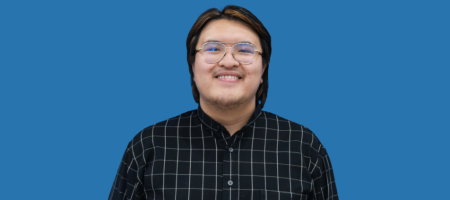
UCLA Student, KN Ngo, NIH Scholarship

UCLA psychology student wins NIH Undergraduate Scholarship

By Kayla McCormack | January 6, 2026

Fourth-year psychology major Khoa-Nathan Ngo has been selected as one of the recipients of the National Institute of Health (NIH) Undergraduate Scholarship Program. This highly competitive award is typically offered to about 12 to 15 students annually.

“It just feels incredible to be selected as a winner. Thanks to this award I don’t have any student loan debt. It also brings me a lot of pride, especially in the ecosystem that scientific research is going through right now, to earn this distinction from the NIH.”

The scholarship provides $20,000 per academic year to support students with tuition, education, and reasonable living expenses. As part of the award, recipients complete a 10-week summer internship and commit to a year of full-time work at the NIH after graduation. Ngo compares the NIH’s role in health research to NASA’s role in space exploration, underscoring his excitement for the opportunity.

Ngo, a transfer from Foothill College, chose his major after discovering a passion for mental health advocacy. As a policy intern with Santa Clara County, he helped lobby for Senate Bill 1318, requiring schools to implement suicide intervention plans.

He also serves as a youth fellow with the Children and Youth Behavioral Health Initiative, a statewide effort to improve mental health support for young people. Currently, he works on the CAL-MAP project, which connects rural primary care providers with psychiatric consultations through a secure online portal to expand behavioral health access.

“Working in policy, I met many lawyers and policy analysts but also doctors and scientists who stepped beyond academia,” Ngo said. “I saw how advocating for greater access gave their clinical work and research more meaning. I couldn’t pursue the physician-scientist path if I couldn’t continue to advocate for increased mental health access.”

At UCLA, Ngo began his start in research journey through the Psychology Research Opportunities Programs, more commonly referred to as PROPS. He worked with Patrick Wilson investigating the role that race-related mistrust plays in medication adherence amongst queer men with HIV.

This year, he’s working in the Brain Body Lab led by Bridget Callaghan, associate professor of psychology, studying the impacts of loneliness during the Covid-19 pandemic on the gut microbiomes of adolescents.

“Undergraduate research, without exaggeration, gave meaning to my academic journey,” Ngo said.  “I am still blown away by the sheer amount of knowledge I have yet to acquire. It makes me admire my mentors even more.”

Ngo hopes to get his M.D./Ph.D. in health psychology or social neuroscience after completing his undergraduate degree.

“I’d love a role that would allow me to do research and clinical care,” said Ngo. “I would also really like to make mentorship and advocacy a huge part of what I do. I’d like to put an emphasis on training those who might not have had the opportunity to enter medicine or science.”

The UCLA Center for Scholarships and Scholar Enrichment empowers students to discover, apply for, and secure scholarships through personalized guidance and support. Learn more.

Read original publication here.

Research Opportunities at ucla

Toward Net Zero? Understanding Media Coverage of Corporate Sustainability

UCLA PI Name: Edward Walker
E-Mail: walker@soc.ucla.edu
Division/Department: Sociology
Expected Weekly Time Commitment: 10 hours

Job Description:

This is a paid position. This project seeks to understand business claims-making about firms becoming “carbon neutral” or “net zero” in the years ahead, and how the media covers firms for their claims on these and related topics. This is a multi-campus project between UCLA and the University of Iowa. At UCLA, we are investigating the media coverage side of this. Research assistants will help to code media stories about major (Fortune 1000) firms and whether their media coverage related to sustainability topics is positive, negative, or neutral. We expect that this work will take place primarily during the later portion of Winter quarter 2026.

Application Instructions:

Please contact Professor Walker via email for a copy of the application form.

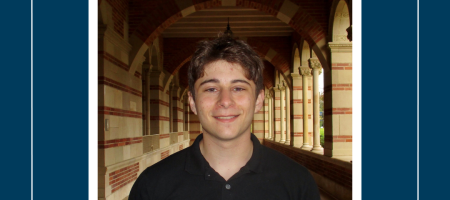
Amit Rand

STUDENT SPOTLIGHT

Meet Amit Rand! Amit is a fourth-year Mathematics of Computation major currently conducting research in the Cardiovascular Imaging Research Lab (CVIRL). In addition, Amit was recently accepted into the Undergraduate Research Scholars Program (URSP), a three-quarter scholarship program that supports students who are conducting a life science, physical science, or engineering research project with a UCLA faculty. After completing his PhD, Amit hopes to work at a foundational research lab (industry or academia) focused on cutting-edge mechanistic machine learning, and eventually pursue entrepreneurship. Learn more about Amit and his UCLA research experience below.

1. How did you first get involved in your research project? Tell us a bit about the lab you are in and the research you are conducting (if possible)!

I joined the Cardiovascular Imaging Research Lab (CVIRL) under Prof. Kim-Lien Nguyen and Prof. J. Paul Finn at the David Geffen School of Medicine shortly after transferring to UCLA, and I’ve been in the lab since July 2024. I’m fortunate to be mentored by Dr. Kim-Lien Nguyen and her post-doctoral fellows, Dr. Thomas Coudert and Dr. Mostafa Mahmoudi, and to work with her collaborator,  Prof. Dan Ruan, as part of a broader effort to accelerate MRI using machine learning.

A core challenge in MRI is that scans can be time-consuming, which often requires patients to hold their breath to reduce motion and improve image quality. Our long-term goal is to enable free-breathing MRI that improves the patient experience without sacrificing diagnostic fidelity. My work focuses on using generative modeling methods to reconstruct images from faster, more limited measurements. I initially joined the lab through a different project and later transitioned into this direction. Along the way, working closely with postdoctoral scholars and project scientists has been especially formative.

2. How would you describe your research experience at UCLA?

My research experience at UCLA has been incredibly positive and impactful. Through the Student Research Program (SRP), I have been able to dedicate structured, accredited time to research while staying on track academically. In addition to participating in SRP throughout the past year, this quarter I have been able to conduct full-time research through a 12-unit SRP enrollment, which has been especially aligned with my goal of pursuing a PhD. I have also felt strongly supported by mentors across the lab, including faculty, postdocs, and graduate researchers, who consistently make time to teach, give feedback, and help students grow.

Working in a clinical research environment has been uniquely motivating because I can see the real-world importance of the problems we’re solving and how they connect to patient care. I’ve also benefited a lot from URC resources and research-focused seminars, especially sessions that demystify topics like getting started in research and preparing for graduate school.

Additionally, I have felt supported more broadly within UCLA’s academic environment as I have pursued research. I have been fortunate to take multiple graduate-level courses through instructors’ consideration and encouragement, and those experiences have strengthened my technical foundation and clarified the research directions I want to pursue going forward.

3. What is your year and major?

Senior (Class of 2026) and Mathematics of Computation

4. What is one piece of advice you have for other students thinking about getting involved in research? As a transfer student yourself, do you have advice specific to other transfer students?

If you’re even considering research, try it. There’s no “perfect time” to start, and it’s often the best way to discover what you enjoy. Many faculty and labs are genuinely excited to mentor motivated undergraduates, especially when you reach out with a clear interest, willingness to learn, and commitment.

For transfer students specifically, leverage UCLA’s structured programs, especially URC Sciences, early, because they can accelerate your integration into the research community. And if it’s hard to get traction at first, don’t be discouraged. Reach out to postdocs and graduate students, too. They can often offer a smaller, well-scoped project that helps you build confidence, skills, and momentum toward a deeper research role. However, be mindful of postdocs’ and graduate students’ time, and always reach out to the Principal Investigator before starting any project.

5. Have you attended a conference before? If so, can you describe your experience on preparation, presenting, etc.?

I recently attended my first conference, The Thirty-Ninth Annual Conference on Neural Information Processing Systems (NeurIPS), where I presented a workshop paper. It was an amazing experience to be surrounded by experts in the field and to have so many conversations across a wide range of topics.

In preparation, I created my first poster, applied for grants to help cover the cost of attendance and travel, and made sure I could clearly explain my work. For presenting, it helps to have a strong two to five minute overview ready, then be prepared to answer questions and engage in deeper discussion. Most interactions move quickly, but the best conversations are with people working on closely related problems. I was fortunate to speak with teams from Microsoft Research, professors from Cambridge and Emory, and researchers at Toyota Research Institute about parallel ideas and directions.

One piece of advice I would carry forward is to attend the full conference if you can. Being there for the entire week makes a big difference for learning and networking.

6. Have you had your work published? Can you talk about what that process was like?

I have published a peer-reviewed workshop paper at NeurIPS as a co-first author, based on independent research with a peer.

The review process was a valuable first-time experience. I learned how to interpret reviewer feedback, respond thoughtfully to critiques, and iterate on the work to strengthen the final submission. Because NeurIPS workshops are peer reviewed, I was also assigned a few papers to review, which gave me experience seeing the process from the reviewer’s perspective and helped me better understand what makes a submission clear, rigorous, and compelling.

7. What are your future career goals?

After completing my PhD, I hope to work at a foundational research lab (industry or academia) focused on cutting-edge mechanistic machine learning, and eventually pursue entrepreneurship. I believe we are at the start of a major transition, and I want to help build the systems that will shape our world by making them safer, more reliable, while being grounded in the real-world. Longer term, I would also love to return to academia in a teaching-focused role at the university level.

8. Please list any URC/departmental programs you are/were involved in. How has your experience been in these programs?

This year (2025–2026), I have been part of the Undergraduate Research Scholars Program (URSP) Sciences, and I also took the RES PRC 194B graduate school application seminar.

URSP is a scholarship program and provides a strong support system. It supplies resources that make it easier to navigate research and build a clearer path forward to ultimately achieve your goals. One of the most memorable parts was access to the research practices courses (RES PRC).

The graduate school applications seminar with Dr. Hasson was especially helpful. The course is designed to help you build every component of a graduate application end-to-end, then refine it through structured feedback from peers and professors who have either gone through the process or are going through it alongside you.

9. What was the impact of undergraduate research on your career path?

Undergraduate research has been the main reason I am now committed to pursuing a PhD and building a long-term career in research. As a transfer student, my path into research was not straightforward, and community college made it clear how challenging it can be to access both research and industry opportunities. Over the past few years, I completed about five industry internships and three research experiences, which gave me a meaningful basis to compare the two.

While I initially expected to go directly into industry, my research experiences were more fulfilling on an intellectual and technical level, and they gave me a stronger sense of purpose and curiosity in my work. Ultimately, undergraduate research shaped my career direction by helping me realize that I want to contribute by doing deep, long-term research and mentorship in the field.


 

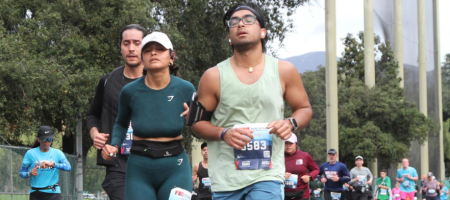
Russel Ahmed, student researcher, running in race

Running for research

UCLA Health featured URSP alum, Russell Ahmed, as he raises awareness on the importance of critical scientific research by running the ASICS LA Marathon.

“Russell Ahmed will be running his first marathon – the ASICS Los Angeles Marathon – on March 8, one eye on the road in front of him and the other on scientific research that changes lives around the world.

Ahmed, 22, graduated from UCLA in June with a BS in neuroscience. Since his freshman year, he had worked as an undergraduate research assistant in the lab of Scott Wilke, MD, PhD, studying the brain’s circuitry and how it is disrupted in psychiatric disorders.

In his senior year, Ahmed was awarded a fellowship under UCLA’s Undergraduate Research Scholars Program. Ahmed was in line to be hired at the lab for a two-year stint before entering an MD-PhD program in 2027, but due to funding freezes he instead worked as an unpaid volunteer for three months. He was then hired by the Wilke lab as a research technician to work with Michael Gongwer, a trainee in UCLA’s Medical Scientist Training Program in the lab of Laura DeNardo, PhD.

The experience and the hurdles stuck with Ahmed, so when it came time to consider running the LA Marathon, he decided to use the opportunity to raise awareness about the importance of critical scientific research. At the same time, he would raise money for event host The McCourt Foundation, which supports research into the cure of neurological diseases.

Ahmed has set out to raise $675 for the McCourt Foundation and, as part of his efforts, was featured in an LA Marathon Instagram post on Giving Tuesday in November.

“I figured fundraising for The McCourt Foundation, while it did not directly address research funding crises here at UCLA, it was a way for me to fight back,” Ahmed said. “It’s just the fact I’m even able to raise awareness even if it doesn’t result in any amount of money. Just spreading awareness that there is lifesaving research, to protect this pursuit to understand diseases and come up with new ways to treat them.””

Read full article by Leo Smith. 


Research Opportunities at ucla

The Portrayal of Schooling in Media: Socio-Economic Advancement vs. Cultural Citizenship

UCLA PI Name: Jeffrey Guhin
E-Mail: guhin@soc.ucla.edu
Division/Department: Sociology
Expected Weekly Time Commitment: 3-10 hours

Job Description:

Students will work with me (Prof. Guhin) to hand-code newspaper articles that mentions schools and education. We will then use these codes as data to coauthor an article or articles about the nature of schooling.

Previous research experience–especially with qualitative coding–is valuable but not necessary. Students should be able to meet weekly with other lab members and do at least three hours of coding a week. Experience with Python and data scraping would be wonderful but is not required.

Application Instructions:

Please e-mail a cover letter outlining your qualifications for this project and a resume to me (Prof. Guhin) at guhin@soc.ucla.edu.

Please also indicate how important it is for you to receive course credit for this research and whether you would want to do so for one or two credit hours.

Research Opportunities at ucla

Undergraduate Research Assistant in the Department of Medicine

UCLA PI Name: Dr. David Meriwether
E-Mail: vwli@mednet.ucla.edu
Division/Department: Division of Digestive Diseases, Department of Medicine
Expected Weekly Time Commitment: 5 hours

Job Description:

We are seeking a highly motivated undergraduate researcher to assist in quantifying sex hormones (estrogens and androgens) in human biological samples. You will be trained in one of the most valuable skills in modern biochemistry: Liquid Chromatography-Tandem Mass Spectrometry (LC-MS/MS).

Responsibilities:
Preparation and extraction of human samples (stool/plasma) for lipidomic analysis.
Operating and maintaining high-performance liquid chromatography (HPLC) systems.
Data analysis and integration of mass spectrometry peaks.
General lab maintenance and buffer preparation.

Requirements:
Commitment: Minimum of 5 hours per week for at least 1 academic year (including summers is preferred).
Attention to Detail: Absolute precision is required for mass spectrometry; small errors compromise data.
Work Ethic: Must be reliable, organized, and eager to learn complex protocols.
Major: Biochemistry, Chemistry, Microbiology, or Related Science fields (coursework in Analytical Chemistry is a plus).
Strongly Preferred: Competent experience with micro pipetting.

What You Will Gain:
Hands-on training with state-of-the-art SCIEX QTRAP 5500Mass Spectrometry.
Mentorship from a PI with a background in Pharmacology and drug development.
Contribution to high-impact research with potential for co-authorship on abstracts/papers.

Application Instructions:

Please email your CV and a brief cover letter explaining your interest in our research to Dr. David Meriwether, PhD at vwli@mednet.ucla.edu.